How to Increase Garden Hose Water Pressure: 9 Things to Check First
When a garden hose feels weak, replacing the nozzle is not the best first step. Start by finding where the restriction begins: the outdoor faucet, hose, reel, connector, or nozzle. A nozzle can shape and concentrate the available flow, but it cannot create water pressure that the plumbing is not supplying.
The fastest diagnosis is to simplify the system. Test the faucet by itself, then add the hose, then add the nozzle. The point where performance drops usually tells you what to inspect.
1. Test the Outdoor Faucet Without the Hose
Disconnect everything and open the outdoor faucet into a bucket or safe drainage area. If flow is already weak at the faucet, the hose and nozzle are probably not the main problem. Compare another outdoor faucet if your home has one.
If all fixtures in the house seem weak, the issue may involve the main supply, pressure regulator, partially closed valve, plumbing restriction, or municipal supply. That is a plumbing problem rather than a nozzle problem.
2. Fully Open the Faucet
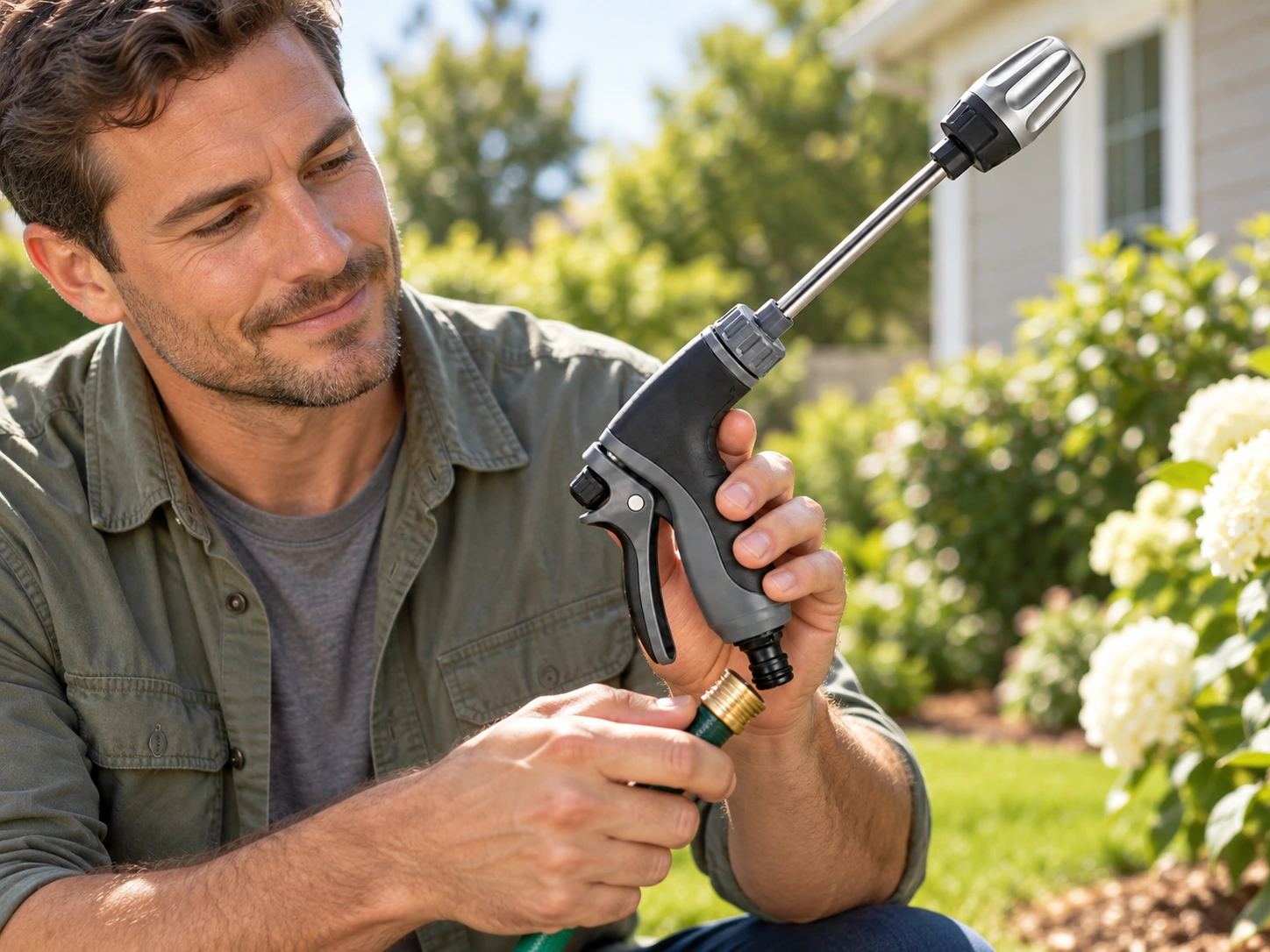
A partially opened hose bib can limit flow. Open it fully unless the fixture has a manufacturer-specific restriction. Also inspect the handle and stem for signs that the valve is not opening normally.
If the faucet leaks heavily around the stem or connection, repair may be needed before you judge hose performance.
3. Straighten Kinks and Tight Bends
A kink acts like pinching a drinking straw. Water may still pass, but available flow drops. Walk the full hose length and straighten sharp bends, loops under furniture, and sections trapped beneath a tire or planter.
Some lightweight or expandable hoses are more sensitive to kinking than reinforced designs. If the hose repeatedly collapses in the same place, internal damage may be creating a permanent restriction.
4. Check for Leaks
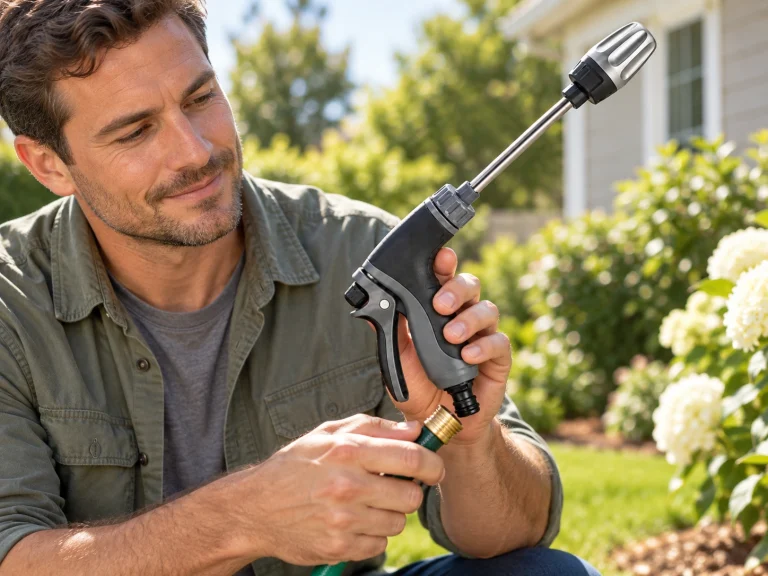
Water escaping through a split hose, worn coupling, missing washer, or loose fitting is water that never reaches the nozzle. Turn the system on and inspect the faucet connection, full hose length, couplings, reel fittings, quick connectors, and nozzle connection.
A small drip may not explain a major pressure loss, but several leaks together can reduce useful flow and make the system messy.
5. Remove the Nozzle and Compare
If the open hose has strong flow but performance drops sharply when the nozzle is attached, inspect the nozzle. Mineral deposits, grit, a damaged internal valve, clogged screen, or partially closed flow-control lever can restrict water.
Rinse removable screens and follow the nozzle manufacturer’s cleaning instructions. Do not force sharp tools through precision openings because that can damage the spray pattern.
6. Check Hose Length
Longer hose runs create more friction loss. The difference is more noticeable when the hose is narrow, the source pressure is modest, or several fittings are added. If possible, connect a shorter hose directly to the faucet and compare the result.
Do not buy far more hose than the yard requires. The most practical length is the shortest one that comfortably reaches the work area.
7. Consider Hose Diameter
Internal diameter affects how much water the hose can carry. A larger-diameter hose can support more flow over distance, but it is also heavier and uses more storage space. A 5/8-inch hose is a common residential size, while larger diameters can help where higher flow or longer runs matter.
Diameter will not fix low pressure at the source, but an undersized hose can become the bottleneck in an otherwise healthy system.
8. Simplify Extra Connectors and Reels
Every fitting introduces another opening the water must pass through. Good connectors may have little practical effect, but narrow quick-connects, partially closed valves, small reel plumbing, splitters, timers, and backflow devices can add restrictions.
For diagnosis, temporarily remove nonessential accessories and connect the hose directly. Add components back one at a time until you find the restriction.
9. Check the Household Supply Safely
If outdoor pressure is poor even with the hose removed, check whether the main shutoff is fully open and whether the problem affects other fixtures. Homes with a pressure-reducing valve can experience low pressure if the valve is failing or incorrectly set.
Do not turn a pressure regulator up blindly. Excessive household pressure can damage fixtures and plumbing. If supply pressure appears abnormal, a licensed plumber can test it with the correct gauge and diagnose the cause.
Can a Nozzle Increase Garden Hose Pressure?
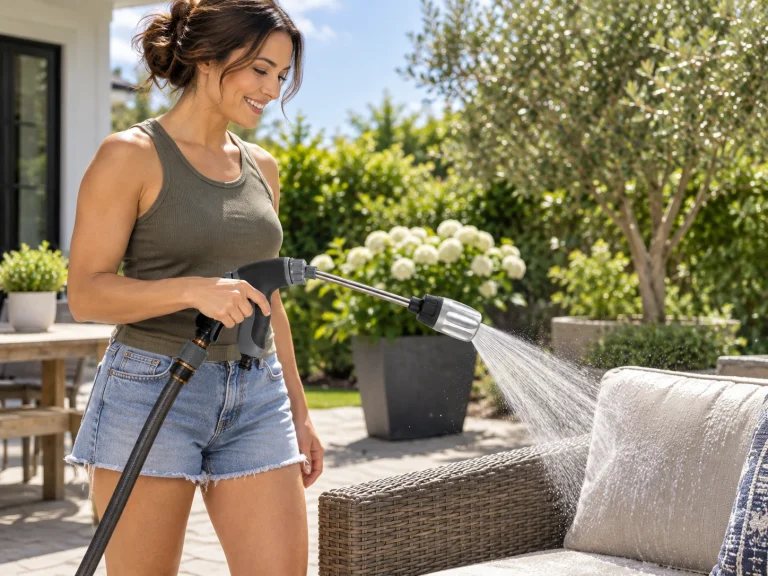
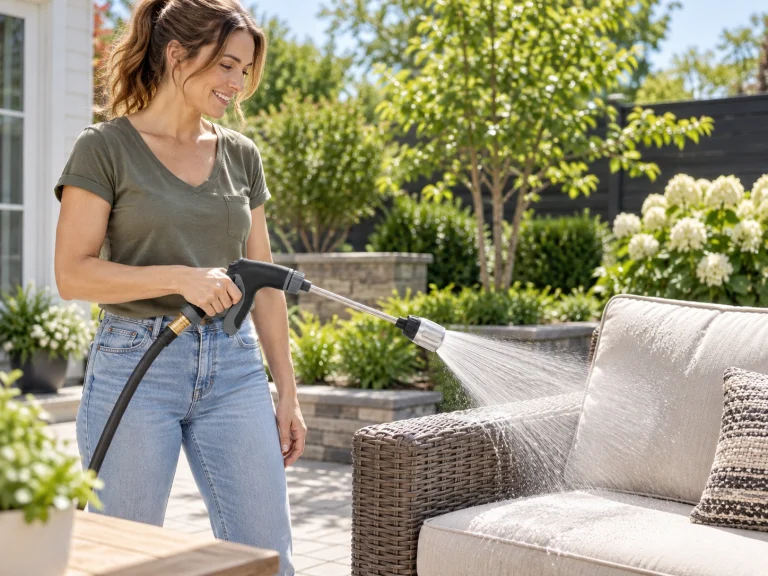
A nozzle can make the stream feel stronger by reducing the outlet and concentrating water into a smaller pattern. In everyday language people often call this “more pressure,” but the nozzle is not adding pump energy to the system. It is changing the balance between flow, outlet size, and stream shape.
This is why a focused jet may clean mud from a tool better than an open hose even though the source pressure has not changed.
When a Booster Pump Makes Sense
A properly specified booster can be appropriate for certain properties with genuinely low supply pressure, long runs, wells, or irrigation requirements. It should not be the first fix for a kinked hose or clogged nozzle. Pumps need to be sized for the water source, flow requirement, plumbing, and local rules.
If you are considering a booster because the entire property has poor pressure, get the source diagnosed first.
Quick Troubleshooting Order
- Test the faucet alone.
- Straighten the hose.
- Check for visible leaks.
- Test the hose without the nozzle.
- Clean the nozzle and screen.
- Try a shorter hose.
- Remove splitters, reels, and extra connectors for testing.
- Investigate household supply only if the source itself is weak.
Measure Before You Guess
If you need an actual pressure number, use a suitable pressure gauge at the outdoor faucet rather than judging only by how the stream looks. A measurement helps separate low static supply pressure from a flow restriction that appears only when water is moving through a long hose or several fittings.
Fix the Restriction Before Buying More Force
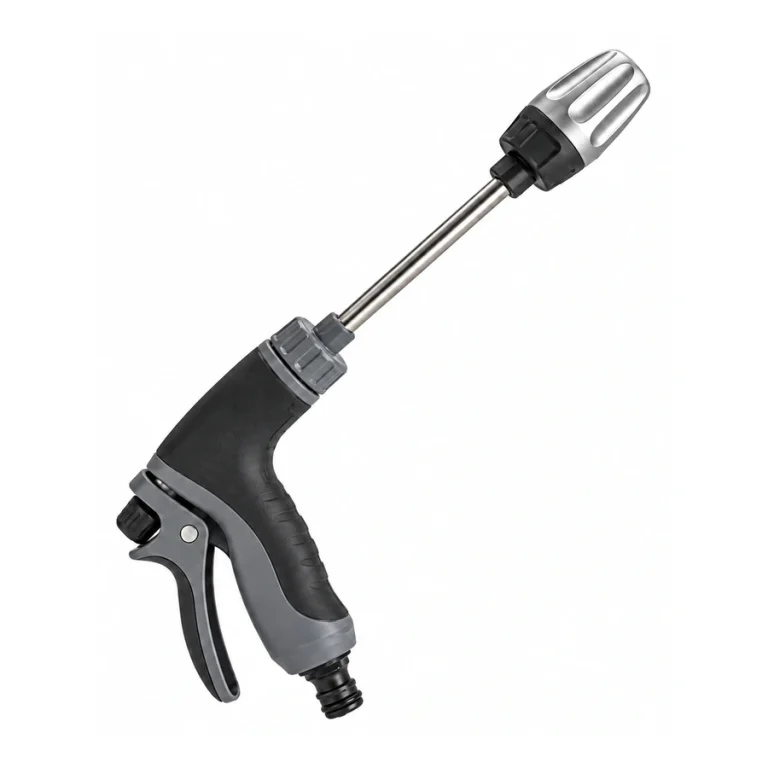
Most hose performance problems are easier to solve when you diagnose them in order. A clean adjustable nozzle can make the available water more useful, but it cannot correct a weak plumbing supply. Once the hose system is flowing properly, HoseHawk Pro can provide adjustable control for routine outdoor rinsing and cleaning.
Related reading: garden hose nozzle spray patterns, pressure washer vs garden hose nozzle.