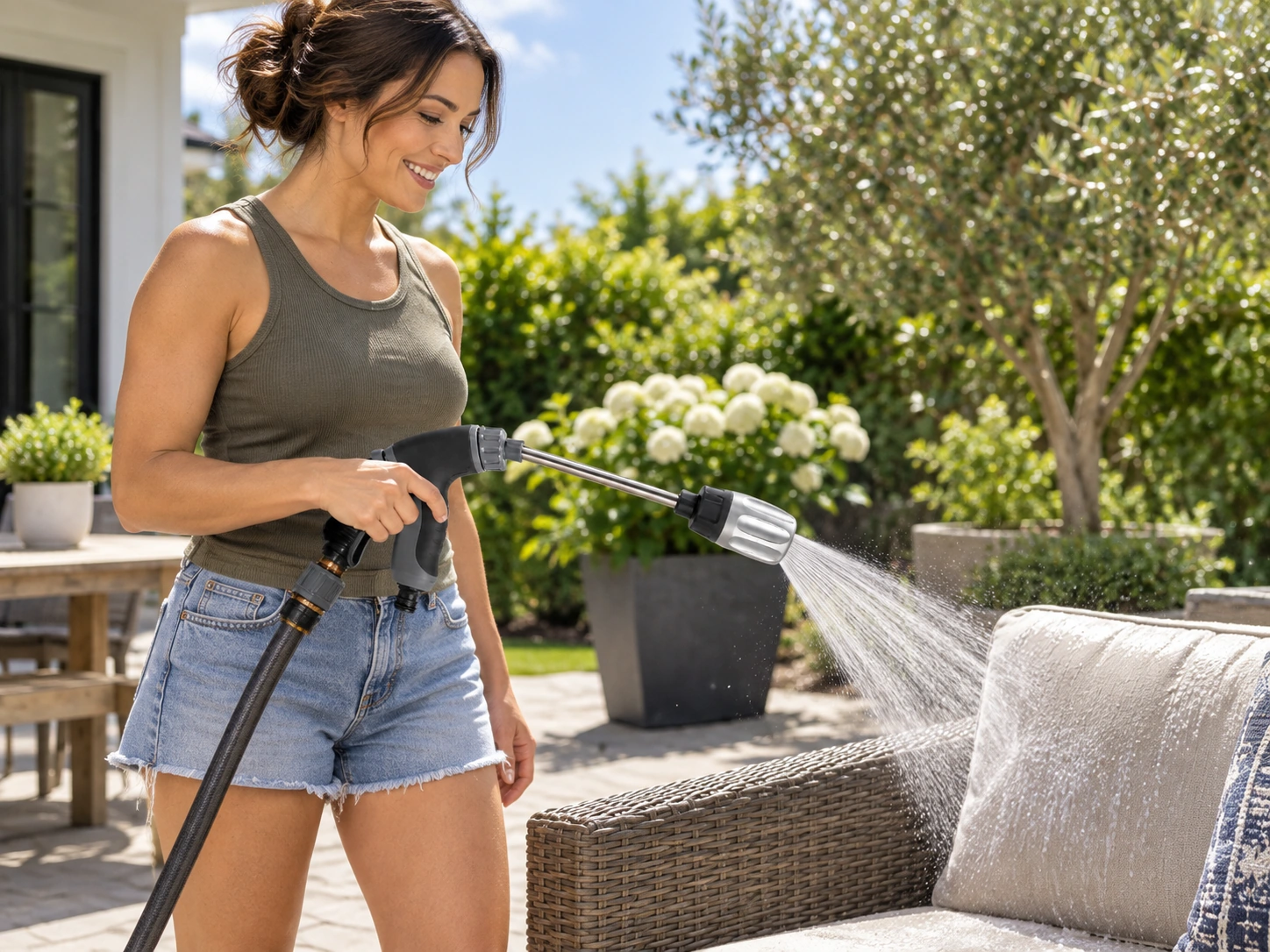
How to Clean Outdoor Furniture With a Garden Hose
Outdoor furniture collects pollen, dust, bird marks, food spills, mildew, and dirt even when it is built to stay outside. The important part is matching the cleaning method to the material. Wicker, metal, plastic, wood, fabric, and cushions all tolerate water differently, so a controlled garden-hose rinse is usually safer than treating every surface with maximum force.
A garden hose is useful for many patio materials because it gives you a controlled rinse without the force of a pressure washer. But the spray setting, cleaner, brush, and drying method still need to match the furniture.
Remove Cushions and Dry Debris First
Take off cushions, covers, pillows, and removable accessories. Brush or vacuum loose dirt before adding water. This is especially important with wicker because dry dust trapped deep in the weave turns into mud once wet.
Inspect the frame at the same time. Look for loose wicker, peeling paint, rust, cracked plastic, open wood joints, or damaged fabric. Cleaning can make weak areas worse if you discover them only after the piece is soaked.
Use a Gentle First Rinse
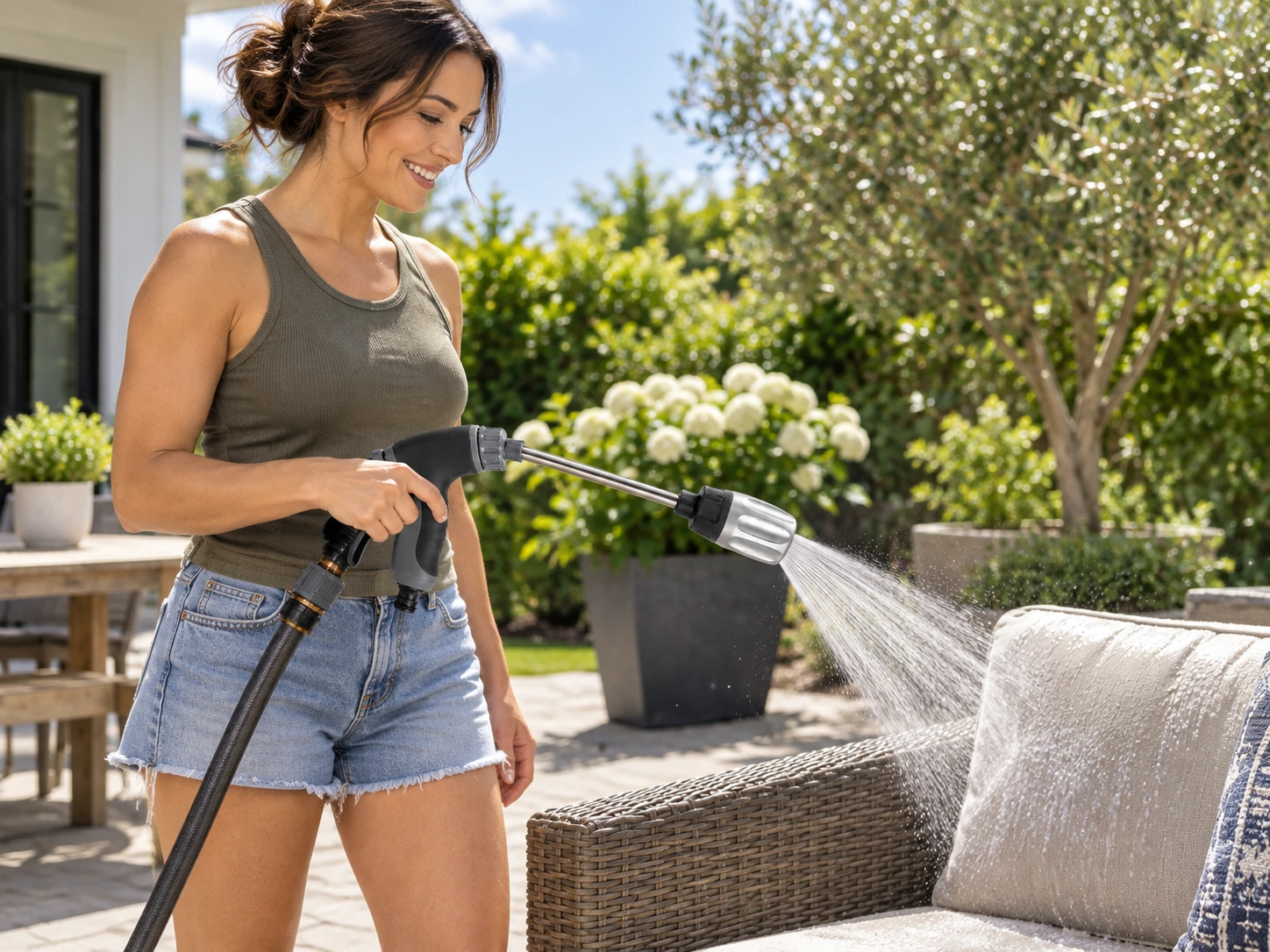
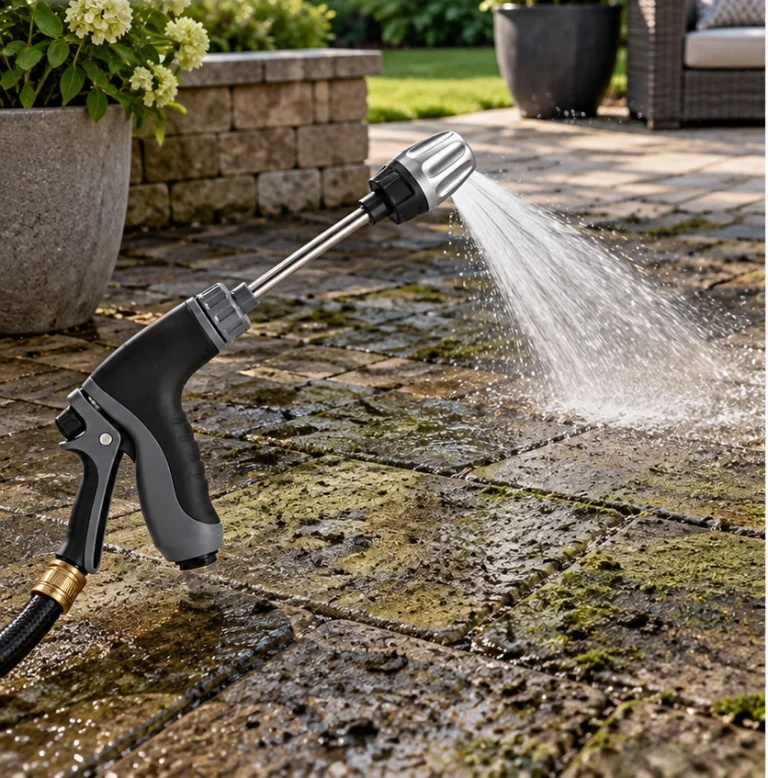
For water-safe materials, start with a broad, gentle hose spray. The goal is to move loose dirt off the surface, not drive water into seams. Keep a little distance and avoid a concentrated jet on woven material, painted finishes, or wood grain.
Natural wicker and some antique or indoor-style woven furniture should not be saturated. If you are not sure if a woven piece is synthetic resin or natural fiber, check the care label or manufacturer guidance before using a hose.
Synthetic Wicker and Resin Furniture
Synthetic all-weather wicker usually handles water well. Use mild soap, warm water, a soft brush, and a gentle hose rinse. Clean along the weave instead of scrubbing aggressively across it. A soft toothbrush can help in tight corners.
Rinse until no soap remains, then towel off standing water and let the frame dry completely before cushions go back on. Avoid pressure washing. High force can separate strands, loosen joints, and drive water into hidden spaces.
Metal Furniture
Powder-coated aluminum and painted steel normally need only mild soapy water and a soft cloth. Rinse with the hose and dry the frame so water does not sit around fasteners or damaged paint.
If you see rust on steel or iron, deal with the rust rather than simply scrubbing harder with soap. Light rust may need careful sanding and touch-up paint. Do not use abrasive pads across intact powder coating because scratching the finish can expose the metal underneath.
Plastic and Resin Chairs
Plastic furniture is usually straightforward. Rinse, wash with mild soap and a microfiber cloth or soft brush, then rinse again. Baking soda is sometimes recommended for stubborn marks, but test first on colored plastic because aggressive cleaners can leave dull spots.
Allow pieces to dry before stacking them. Moisture trapped between stacked chairs can encourage mildew and marks.
Wood Furniture
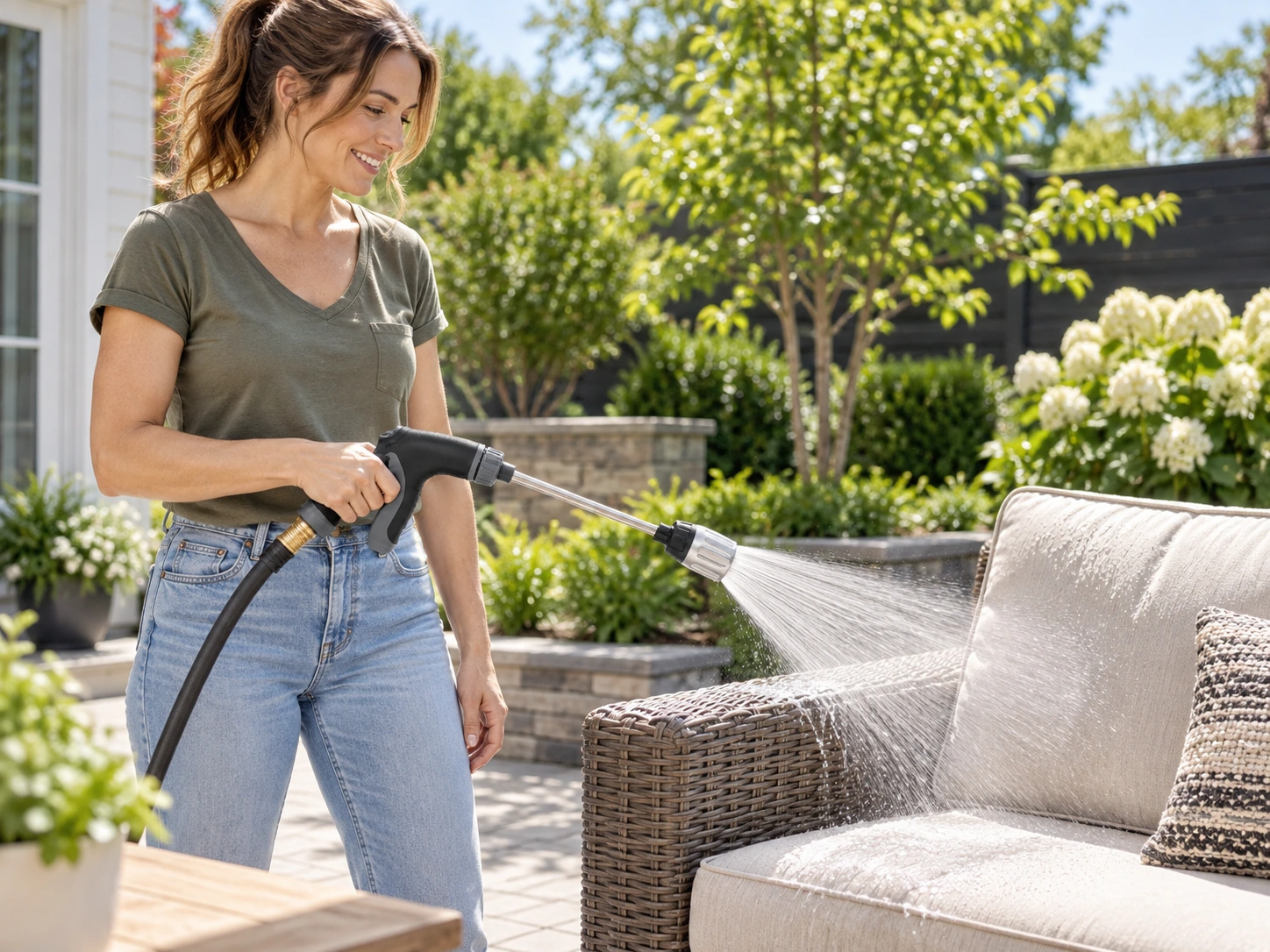
Wood requires more care because finishes and wood species vary. Teak, cedar, acacia, painted wood, and sealed wood do not all use the same maintenance products. Mild soap, a soft brush, and a gentle rinse are a safe starting point for many pieces, but follow the manufacturer’s instructions if you have them.
Scrub with the grain and avoid blasting end grain or joints. Let wood dry fully before applying any oil, sealer, or protective finish. Do not assume every wood chair needs oil after washing; Some teak is intentionally left untreated so it can weather naturally.
Outdoor Cushions
Check the care tag first. Removable covers may be machine washable, while fixed cushions often need spot cleaning. For many outdoor fabrics, the common method is to brush off loose dirt, apply mild soap solution, let it work, rinse with a moderate hose spray, then remove as much water as possible with towels.
Dry cushions completely before putting them back on the furniture or storing them. Stand them on edge so air can move around both sides. Putting damp cushions back onto a frame or under a cover can trap moisture and create mildew.
Avoid the High-Pressure Shortcut
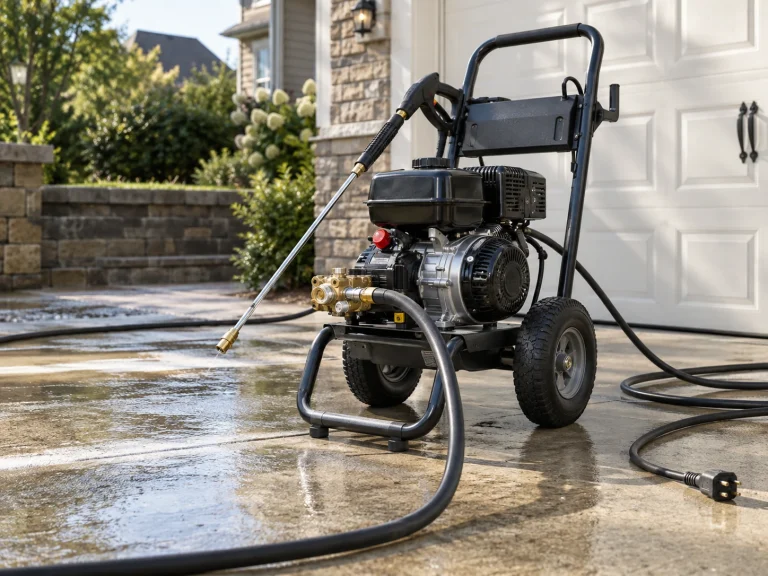
Avoid using a pressure washer on delicate wicker, wood, and painted furniture unless the manufacturer specifically allows it. The risk is not only visible damage. High-pressure water can also force moisture into joints, weave, seams, and cushion foam where drying takes much longer.
A garden hose with an adjustable nozzle gives you enough control for routine rinsing. Use wider spray patterns on delicate materials and save tighter streams for hard, durable surfaces where the manufacturer allows them.
Clean in This Order
- Remove cushions and accessories.
- Brush or vacuum loose dirt.
- Inspect damage and material type.
- Rinse gently where the material allows it.
- Wash with mild soap and the correct brush or cloth.
- Rinse away every trace of cleaner.
- Dry completely before reassembly or covering.
How Often Should You Clean Patio Furniture?
A deep clean at the start of the outdoor season is common, but light maintenance during the season keeps the job smaller. Wipe food spills quickly, brush off pollen, and rinse dusty synthetic frames before grime hardens. Furniture covers and dry storage can also reduce the amount of deep cleaning needed.
Do Not Put Cushions Back While They Are Damp
Even when a cushion cover feels dry on the surface, moisture can remain in the foam. Putting damp cushions back on a frame or under a cover can trap moisture and encourage odor or mildew. Stand cushions on edge in a ventilated area and give them enough time to dry all the way through.
If the care label allows removable covers to be washed, follow that label rather than assuming every outdoor fabric can go through the same machine cycle. Zippers, coatings, foam inserts, and water-resistant treatments vary by manufacturer.
Match the Spray to the Material
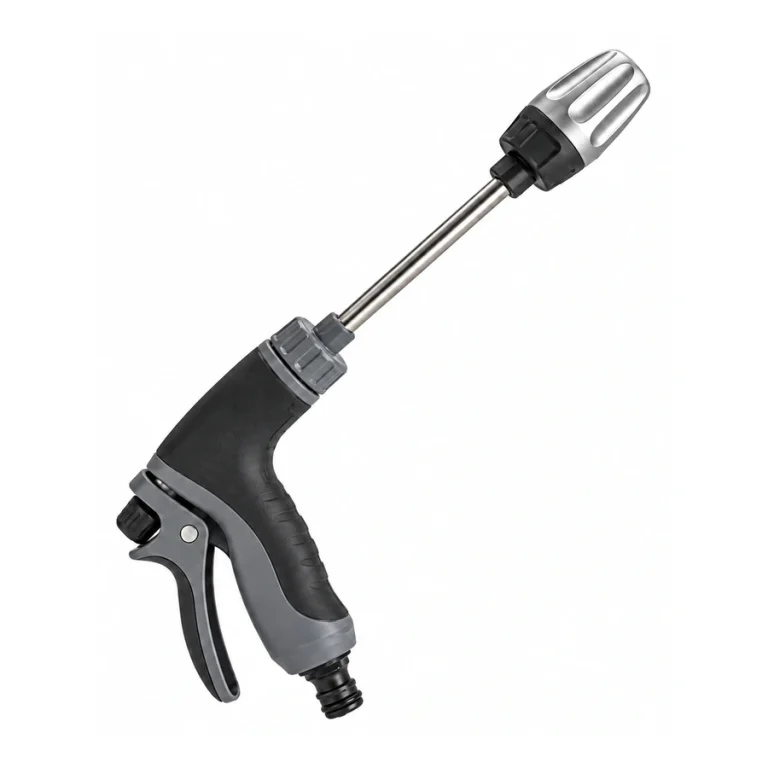
The safest outdoor-furniture routine is simple: identify the material first and use the least aggressive cleaning method that works. A broad garden-hose rinse is useful on many synthetic, metal, and plastic pieces, while natural wicker and delicate finishes need more caution. For a compact adjustable hose attachment, see HoseHawk Pro, and always follow the furniture manufacturer’s care instructions.
Related reading: garden hose nozzle spray patterns, pressure washer vs garden hose nozzle.