How to Wash a Car With a Garden Hose Without Scratching the Paint
You can wash a car safely with a normal garden hose, but the important part is not how hard the water hits the paint. The key is removing loose grit before a mitt or towel touches the surface. Work on cool paint, pre-rinse well, keep wheel dirt separate from bodywork, use clean wash media, and dry the car before mineral-rich water leaves spots.
Most wash scratches come from friction. Sand, road film, brake dust, and tiny hard particles become abrasive when they are trapped between the paint and a sponge, brush, or towel. A safer home wash is designed to keep that contamination away from the clear coat.
Wash in Shade on Cool Panels
Choose a shaded area or a cooler time of day. Hot paint makes water and shampoo dry too quickly. That can leave soap residue or water spots and can force you to scrub marks that would have rinsed away more easily on a cool panel.
Close the windows, sunroof, doors, hood, and trunk properly. Remove jewelry or anything on your clothing that can touch the paint. Walk around the car and look for loose trim, damaged seals, open electrical accessories, repaired paint, or anything that needs a gentler rinse.
Start With a Thorough Pre-Rinse
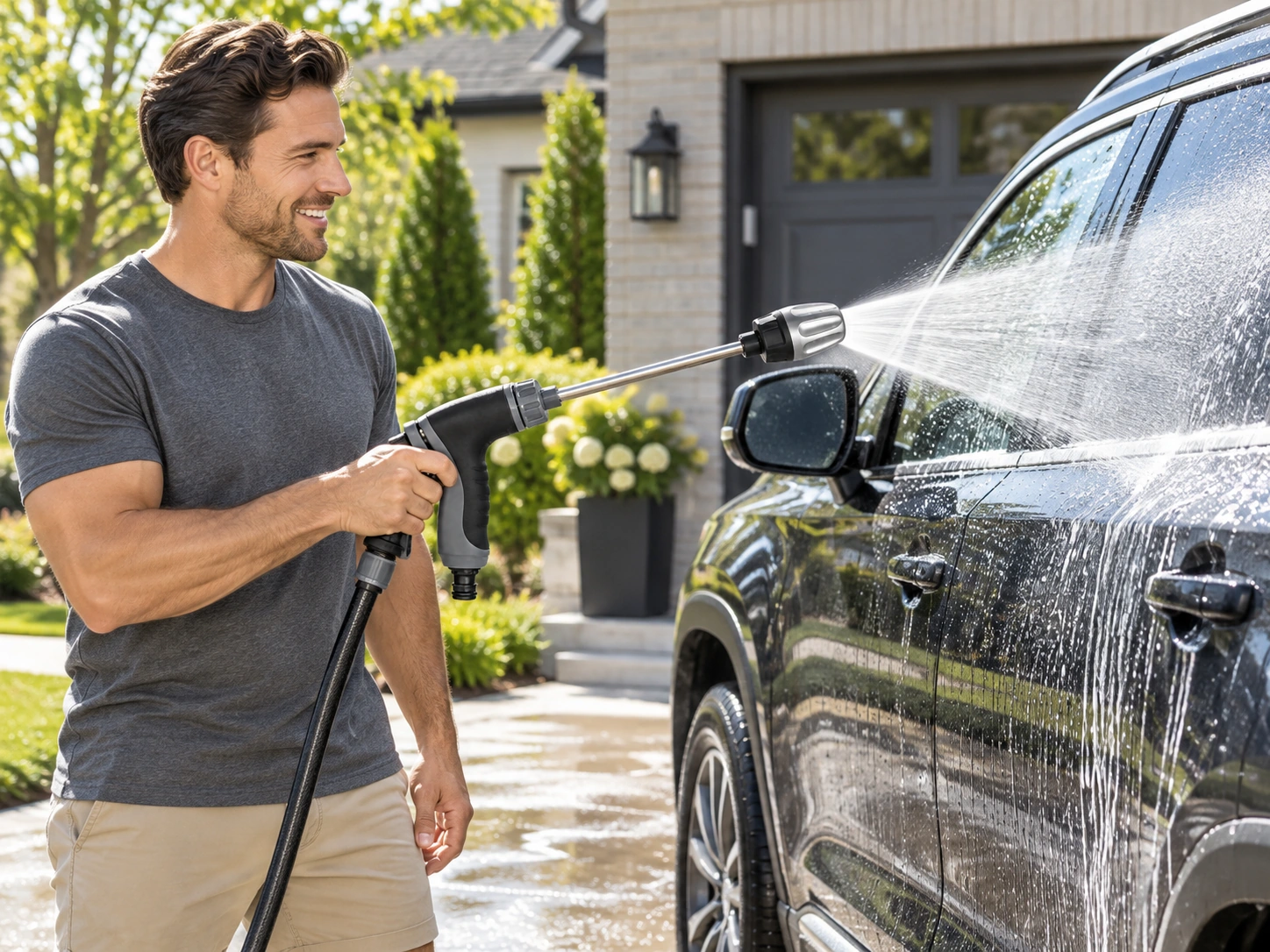
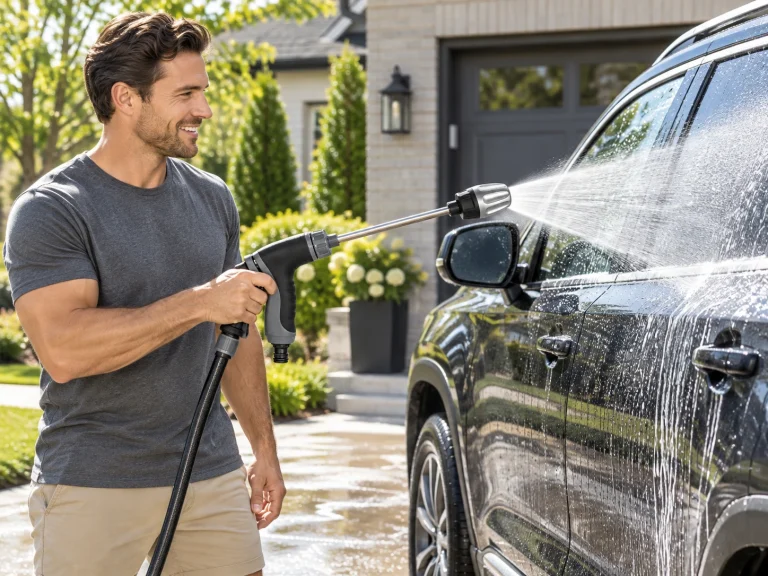
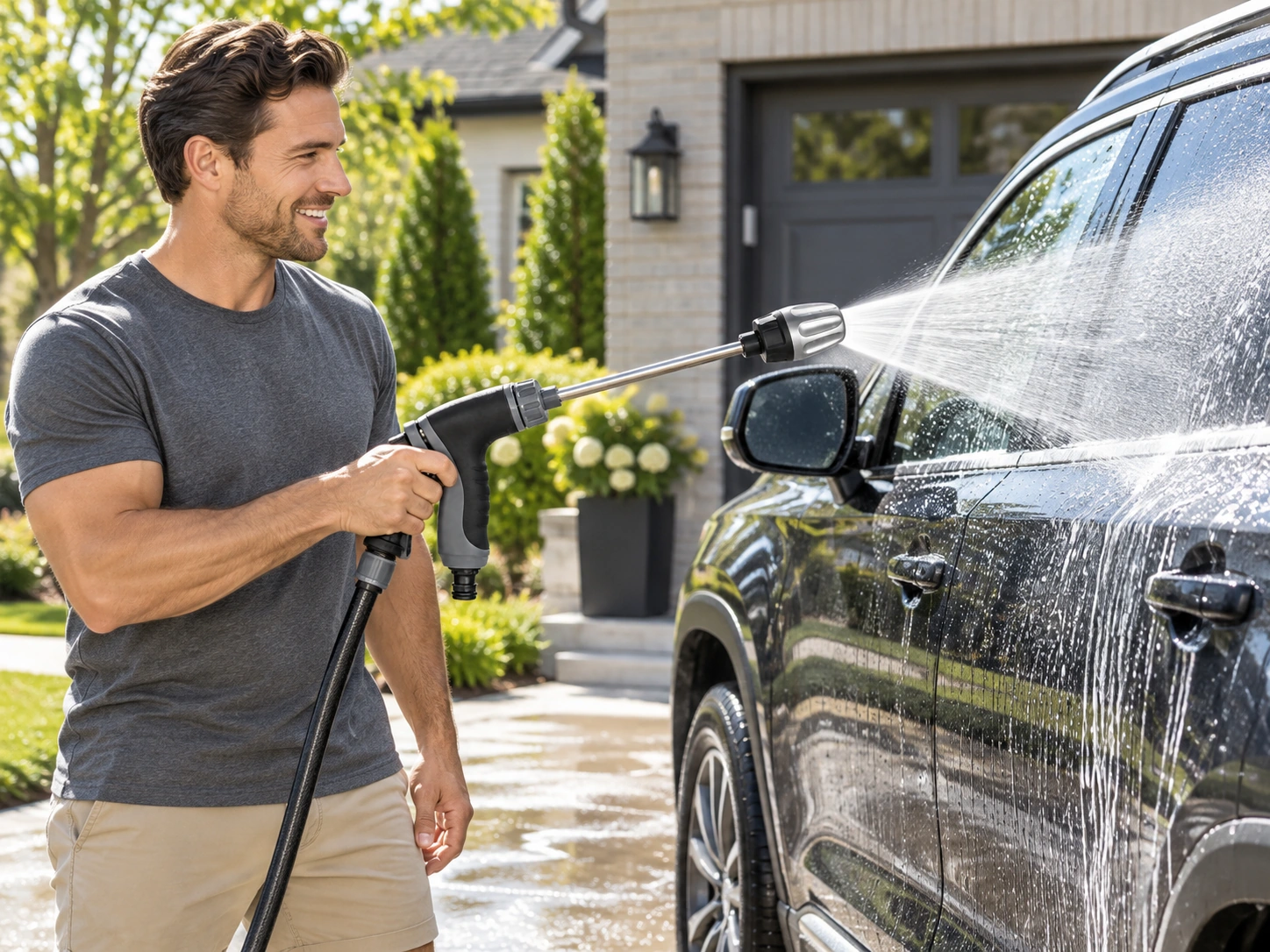
Before touching the car, rinse from the roof down. A garden hose with an adjustable nozzle works well for this stage. Use a broad, controlled spray across paint and glass. Give muddy lower panels, wheel arches, and bumpers more time, but let the water soften and move the dirt rather than trying to scrape it off.
This first rinse is not about creating pressure-washer force. It is about taking away as much loose grit as possible. Pre-rinsing helps reduce swirl marks because every particle removed now is one less particle that can be dragged under the wash mitt later.
Clean Wheels With Separate Tools
Wheels collect brake dust, road grit, and heavier contamination. Use a dedicated wheel brush or mitt and do not move the same tool from the wheels onto the paint. If you use a wheel cleaner, follow its directions and make sure it is compatible with the wheel finish.
Rinse wheels carefully around valves, cameras, sensors, painted calipers, polished metal, or damaged coatings. A concentrated stream may be useful for tire tread and wheel wells, but painted and delicate areas should get a wider spray and more distance.
Use the Two-Bucket Method
Fill one bucket with the correct dilution of automotive shampoo and the other with clean rinse water. A grit guard in the bottom is helpful if you have one. Load a clean microfiber or lambswool mitt with soapy water and work one section at a time.
After each section, rinse the mitt in the clean-water bucket before loading it with shampoo again. This simple step keeps much of the removed dirt out of the wash solution. It is a major improvement over using one dirty bucket for the whole vehicle.
Work From the Cleanest Areas to the Dirtiest
Start on the roof and upper glass, then move to the hood, trunk, upper doors, and lower panels. Save rocker panels and the dirtiest lower areas for last. Use light, straight passes rather than aggressive circular scrubbing.
If one spot does not come clean, do not simply push harder. Re-wet it, apply more shampoo, and give the contamination time to soften. Bug residue, tree sap, and other bonded material may need a product designed for that problem rather than extra pressure from your hand.
Choose the Right Nozzle Setting
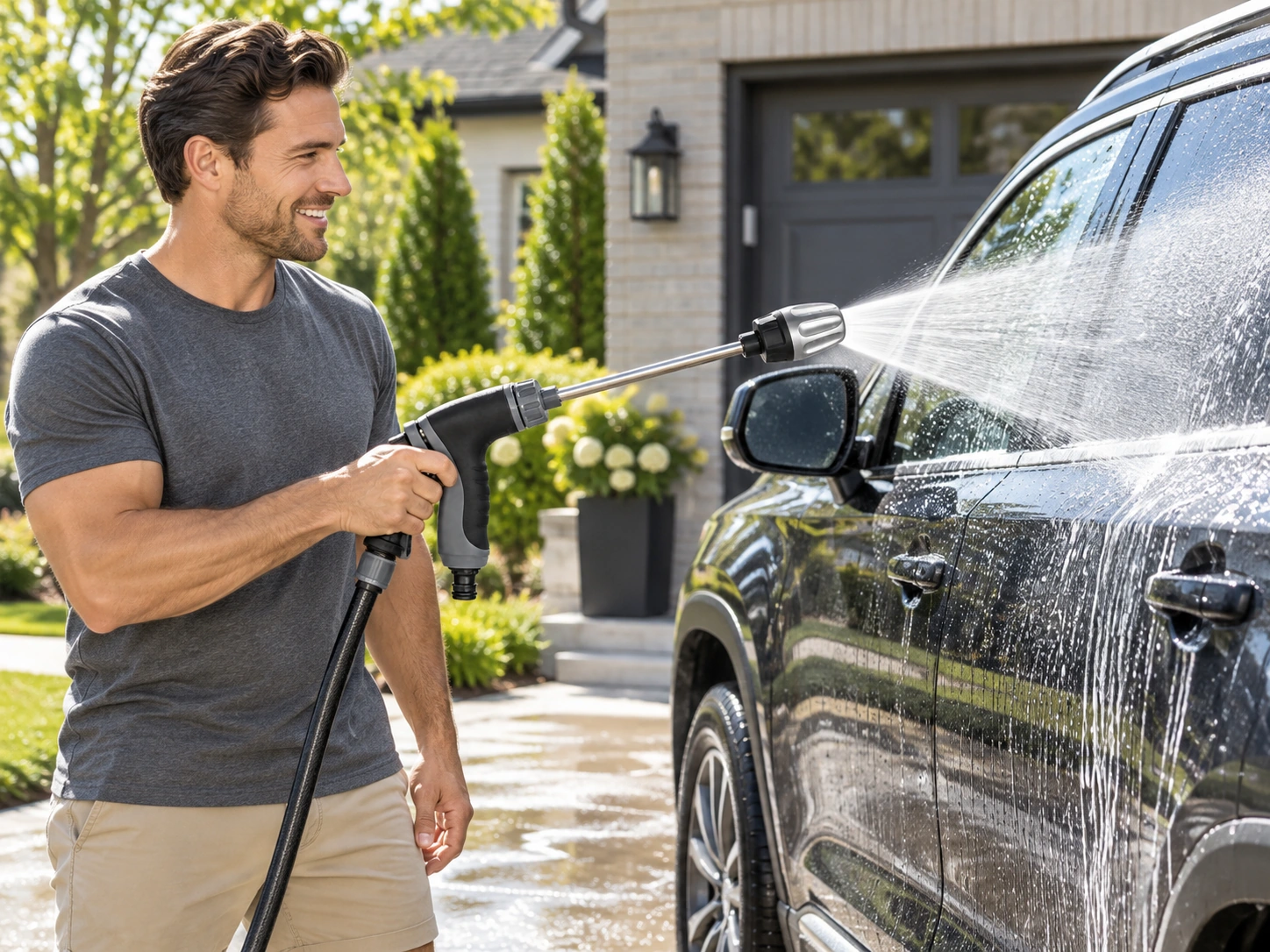
For painted panels, a broad fan or shower-style spray gives good coverage and control. A tighter stream can be useful on suitable areas such as muddy tires or the underside of wheel arches, but keep it away from chipped paint, loose trim, seals, cameras, sensors, and openings.
A hose nozzle changes the shape and speed of the stream. It does not create the thousands of PSI produced by a powered pressure washer. That difference is useful to understand because it helps you choose the tool based on the job rather than a marketing label.
Rinse Completely Before Drying
Once the contact wash is finished, rinse from top to bottom again. Make sure shampoo is removed from mirrors, door handles, badges, trim, and panel gaps. Do not allow soap to dry on the paint.
You can use a gentle sheeting flow for the final rinse if your nozzle makes that easy. A smooth sheet of water can carry water off larger panels and leave less standing water to dry.
Dry With Clean Microfiber
Do not let the car simply air dry in strong sun, especially if your water leaves mineral spots. Use a clean, soft microfiber drying towel. Blot or use light straight passes rather than pressing hard. If the towel is dropped on the ground, replace it with a clean one before touching paint again.
Separate towels for wheels, door jambs, and heavily contaminated areas are also a good idea. The goal is to stop dirty tools from moving back onto the clean bodywork.
Think About Runoff and Water Use
Home car washing can send soap, dirt, and oily residue toward storm drains. Local rules vary, so check your area. Some water-conservation guidance recommends washing over a suitable permeable surface when allowed, using an automatic shutoff nozzle, and keeping water running only when needed.
If you cannot control runoff or local rules restrict driveway washing, a commercial car wash that captures and treats wastewater may be the better option.
Common Home-Wash Mistakes
- Touching dusty paint before a proper rinse.
- Using dishwashing liquid instead of automotive shampoo.
- Using the same sponge on wheels and paint.
- Working on hot panels in direct sun.
- Letting soap or hard water dry on the vehicle.
- Using household towels or dirty microfiber.
A Simple Safe Routine
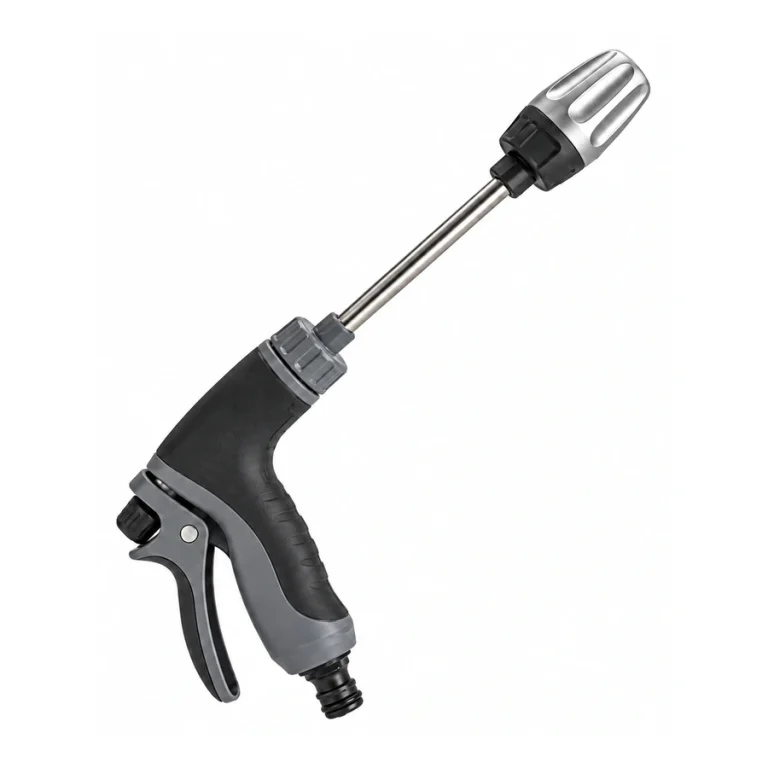
Cool the panels, rinse first, keep wheel tools separate, wash top to bottom with two buckets, rinse thoroughly, and dry with clean microfiber. A garden hose and controlled nozzle are enough for a careful maintenance wash when the vehicle is not heavily contaminated. If you want a compact hose attachment for routine outdoor rinsing, see HoseHawk Pro, and always match the spray setting to the surface you are cleaning.
Related reading: garden hose nozzle spray patterns, pressure washer vs garden hose nozzle.