How to Clean Vinyl Siding With a Garden Hose
Vinyl siding usually does not need aggressive water pressure to look clean again. Dust, pollen, road film, bird marks, and light algae can often be handled with a garden hose, mild cleaner, and a soft brush. The safest approach is to clean gently, avoid forcing water behind the siding laps, and let the cleaner and brush do most of the work.
The biggest risk is not that vinyl cannot get wet. Vinyl siding is made for exterior exposure. The risk comes from driving water upward behind overlapping panels, into window details, soffit openings, vents, or damaged sections. That is why nozzle direction matters as much as the cleaner.
Inspect the Wall Before You Start
Walk along the siding and look for loose panels, cracked vinyl, damaged J-channel, open seams, failed caulk, broken vents, or gaps around lights and outlets. Cleaning should not be used to hide existing defects. If a section is loose, repair it before directing water at the area.
Also identify the staining. Brown splash marks near the ground may be soil. Green growth is often algae. Black spotting can be mildew or another contaminant. A chalky film on older siding may be oxidation, which does not always respond to ordinary soap the same way dirt does.
Protect Plants and Electrical Areas
Move lightweight furniture, cover sensitive electrical items as appropriate, and close nearby windows. Wet plants and soil before using cleaning solution so leaves are less likely to absorb concentrated cleaner. If the product label calls for extra plant protection, follow it.
Avoid spraying directly into outdoor outlets, open fixtures, vent openings, or damaged seals. Water should travel across and down the siding, not up under it.
Begin With a Plain-Water Rinse
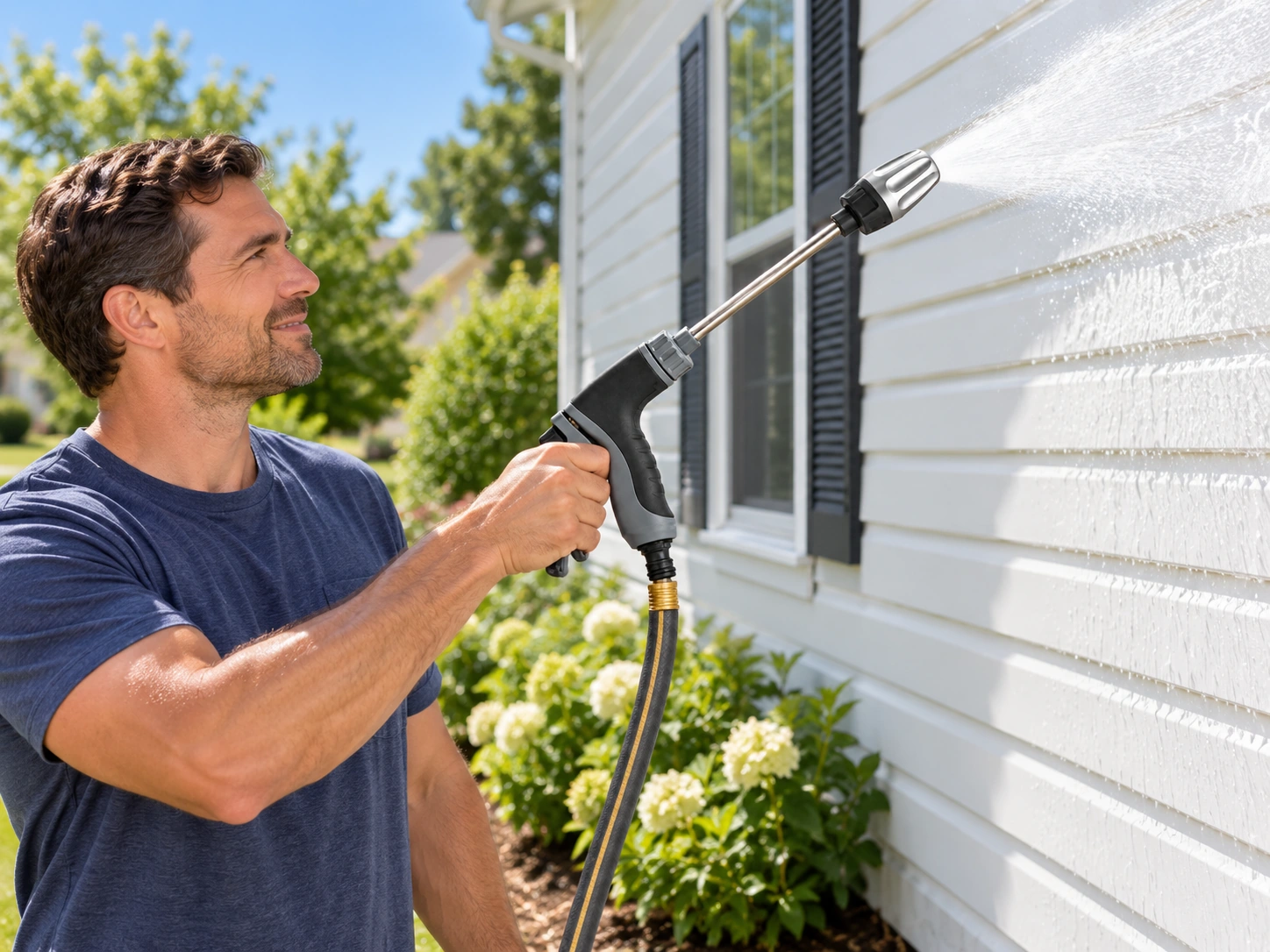
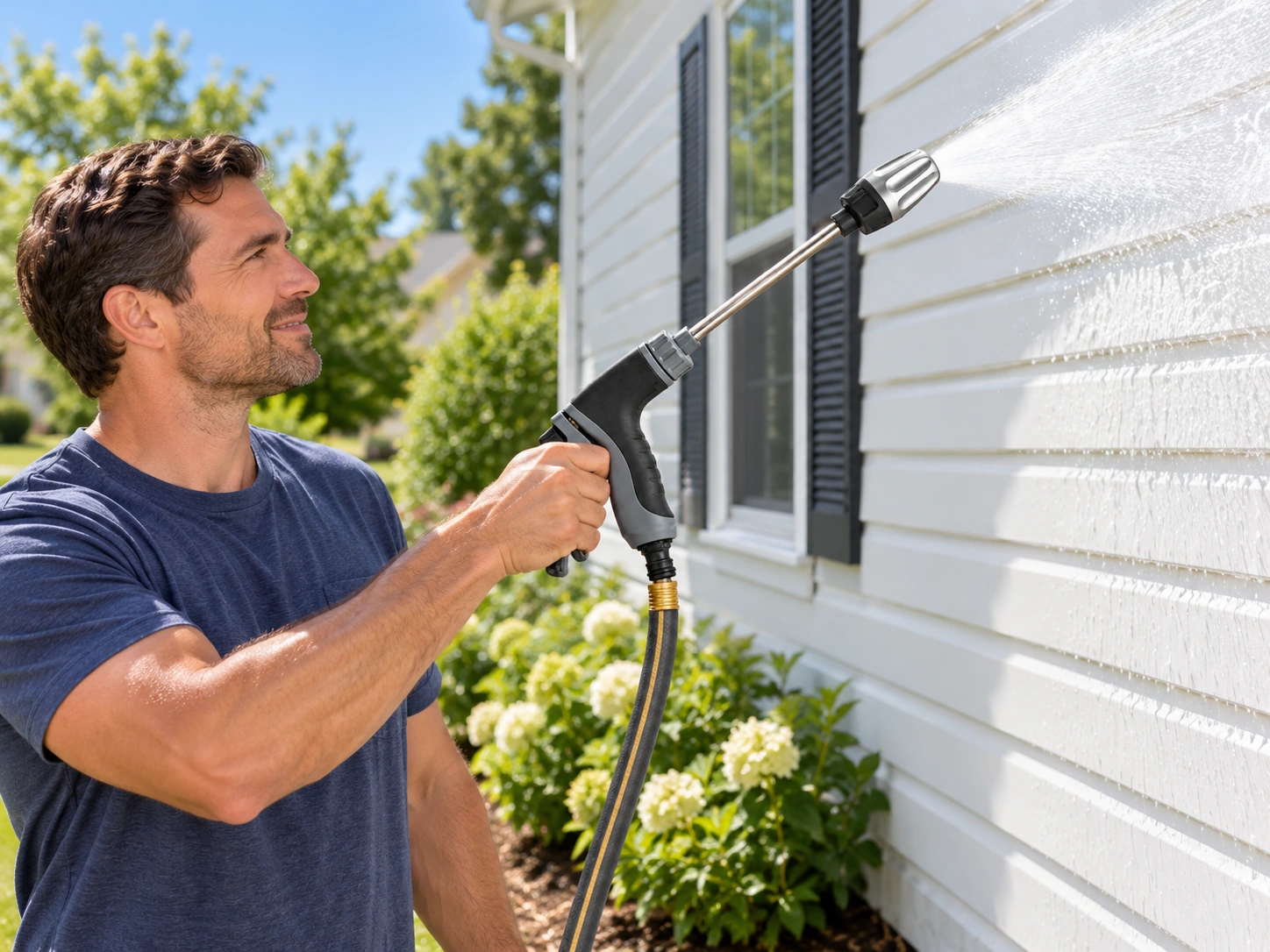
For light dust, a garden hose may be all you need. Use a wide spray and rinse the wall while keeping the nozzle at a sensible distance. Start high enough that runoff moves down the wall, but keep the spray angle level or slightly downward.
Do not stand close and aim a tight jet upward beneath the siding laps. Avoid this because vinyl systems shed rain downward; they are not designed for concentrated water being driven behind the panels from below.
Use a Mild Cleaner for General Grime
For routine dirt, a bucket of warm water with mild dish soap is a common recommendation. Use a soft-bristle brush, car-wash brush, or non-abrasive sponge. Work in sections that are small enough to clean and rinse before the solution dries.
Work in manageable sections and focus on one important rule: do not let the cleaning solution dry on the wall.
For Algae or Mildew, Match the Cleaner to the Siding
White-vinegar solutions, oxygen-based cleaners, and manufacturer-approved siding cleaners are commonly used options. Chlorine bleach is also used in some professional and DIY methods, but it needs more care around plants, colored surfaces, metal, and other materials.
Before using any stronger product, read the siding manufacturer’s care instructions if you can identify the brand. Test the cleaner in a small inconspicuous area and check the dried result, not just the wet surface.
Scrub With Soft Bristles
A soft-bristle brush helps loosen dirt in textured panels and grooves. Avoid wire brushes, harsh scouring pads, and abrasive powders. These can scratch or change the gloss of the vinyl and may make cleaned sections look uneven.
Use an extension pole for reachable upper sections rather than standing on an unstable ladder with a hose in your hand. For tall homes or areas that cannot be reached safely from the ground, professional cleaning is the better choice.
Rinse Thoroughly and Keep the Spray Controlled
After scrubbing a section, rinse it before the soap dries. Use a broad spray and move from top to bottom so residue is carried away. Check trim, corners, panel overlaps, and the bottom edge for trapped suds.
If a section still looks dirty when wet, repeating a mild-cleaner pass is usually safer than immediately switching to a narrow high-force stream.
What a Hose Nozzle Can and Cannot Do
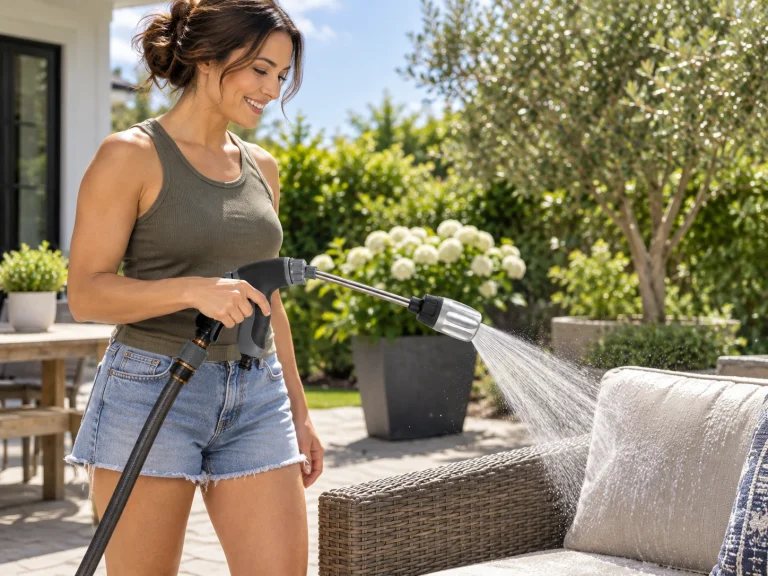
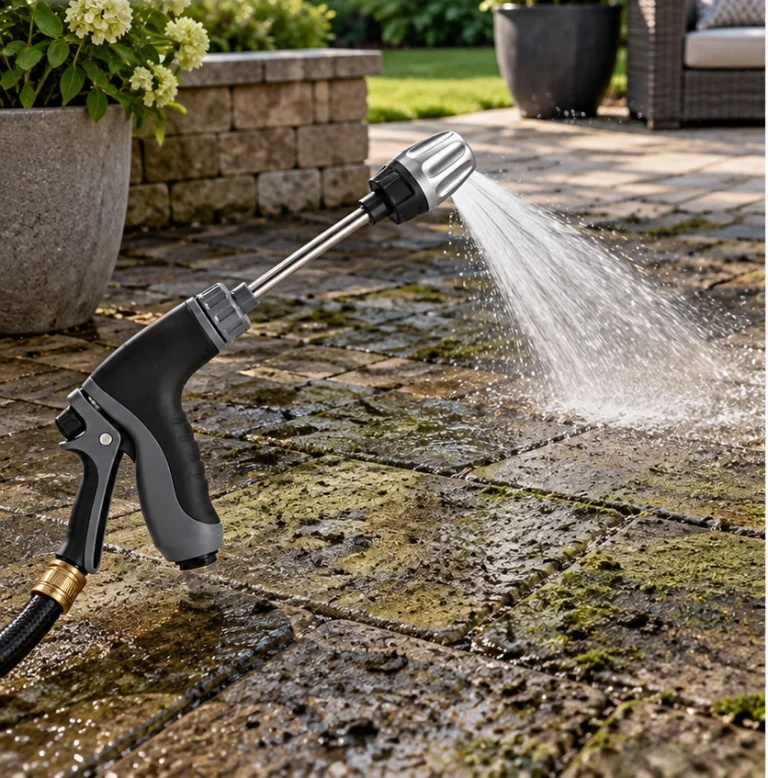
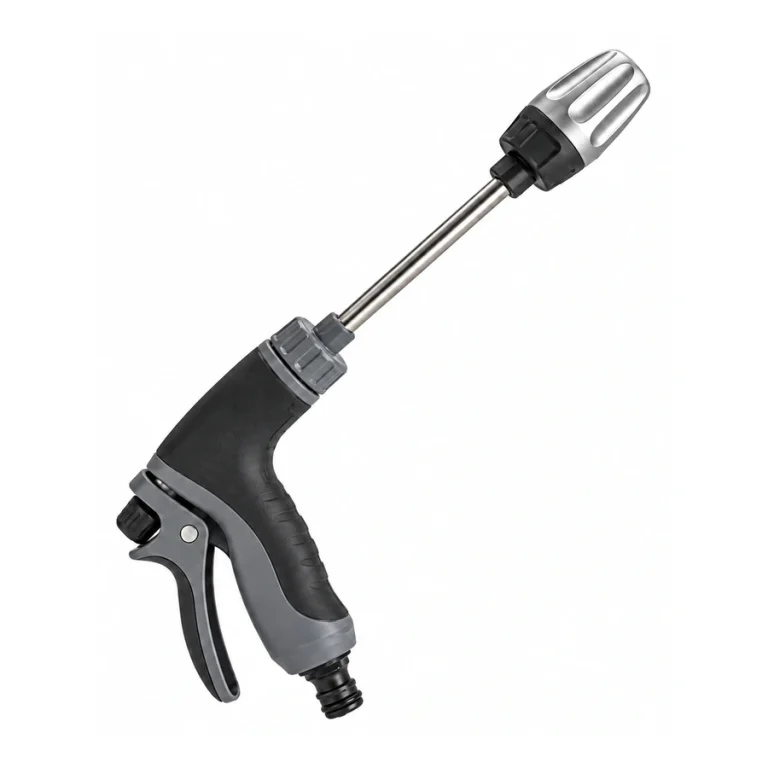
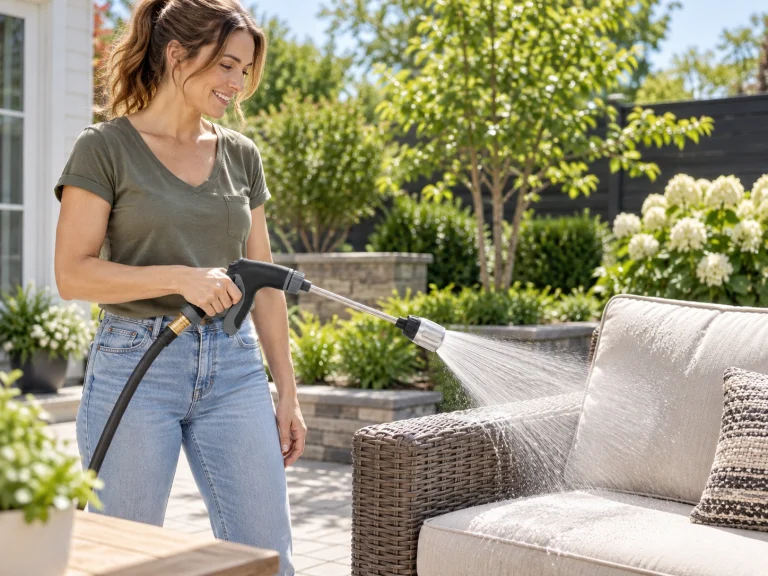
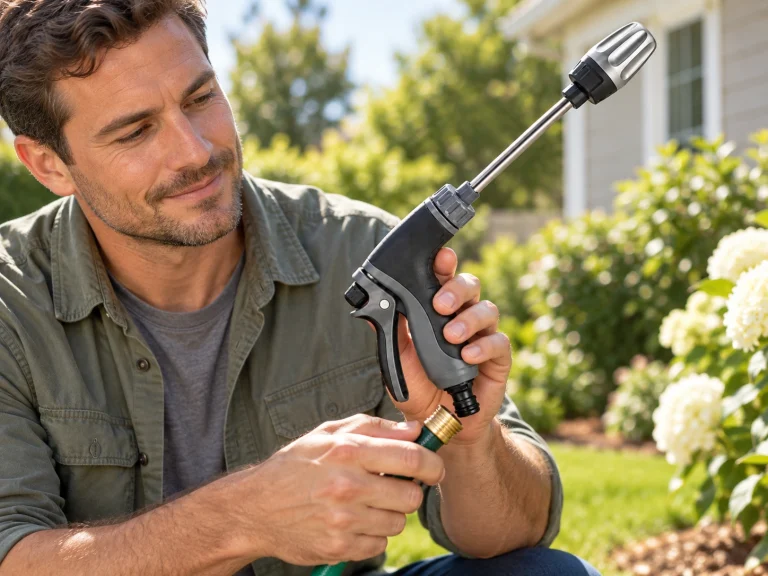
An adjustable nozzle gives you a convenient way to switch between a broad rinse and a more focused stream. That is useful for normal exterior maintenance. It does not create the pressure of a powered pressure washer, and this is often an advantage on siding because you have less force available to drive water into vulnerable areas.
However, a hose nozzle also does not replace the cleaning action of a suitable detergent on established algae or oxidation. Water flow is only one part of the process.
When to Stop and Call a Professional
Stop if you see water entering around windows, loose panels, significant oxidation, heavy mold that returns quickly, or staining you cannot identify. Multi-story work, damaged siding, and areas near electrical service equipment are also good reasons to use a qualified professional.
Simple Maintenance Helps
A light wash once or twice during the season is easier than waiting until thick organic growth covers the wall. Trim plants that sit against the siding, keep gutters working, and rinse obvious splash dirt before it builds into a heavier stain.
Work in Small Sections on Hot or Sunny Days
Vinyl can warm quickly in direct sun, and cleaning solution can dry before you have time to rinse it. Work on a manageable section, keep the surface wet enough for the cleaner to do its job, and rinse before residue dries. Starting on the shaded side of the house can make the process easier.
For upper sections, avoid unsafe ladder positions while handling a hose. An extension brush or a professional service is a better choice when the wall cannot be reached safely from the ground.
Best Low-Pressure Approach
Inspect first, protect plants, rinse with a broad spray, use mild cleaner, scrub with soft bristles, and rinse down before residue dries. This is slower than aggressive washing but gives you better control around seams and trim. If you want a compact nozzle for routine rinsing around the home, see HoseHawk Pro and keep the stream level or downward when working on siding.
Related reading: garden hose nozzle spray patterns, pressure washer vs garden hose nozzle.