How to Clean a Patio Without a Pressure Washer
A dirty patio does not always need a pressure washer. For many pavers, older joints, natural stone, and smaller outdoor areas, a broom, the right cleaner, a stiff brush, and a garden hose give you more control and reduce the chance of disturbing joints or damaging a delicate surface. The basic method is simple: remove dry debris, loosen the grime with a suitable cleaner, scrub where needed, and rinse before the dirty water dries again.
The main advantage of this method is control. A pressure washer can remove grime quickly, but a concentrated jet can also disturb sand or mortar in joints, roughen softer surfaces, and throw dirty water into nearby plants or walls. Manual cleaning takes more effort, but it lets you match the brush, cleaner, and rinse strength to the patio in front of you.
Start by Checking the Patio Surface
Before mixing anything, identify what you are cleaning. Concrete, porcelain, sandstone, limestone, clay pavers, and sealed surfaces do not all react the same way to acids, bleach, or strong detergents. If you are not sure about the material, start with mild soap and water and test any stronger cleaner on a small hidden area.
Also look at the joints. If pointing is already loose or crumbling, aggressive pressure is more likely to make the problem worse. A lower-pressure method is often a better fit for older patios and delicate paving.
Clear the Area and Sweep It Properly
Move chairs, plant pots, rugs, toys, and small tables off the surface. If the patio is large, work in sections rather than trying to clean around furniture. Sweep leaves, dry soil, sand, and loose moss before adding water. This matters because dry debris is much easier to remove before it turns into muddy slurry.
Pull weeds from the joints where practical. Thick moss can also be scraped or brushed away before washing. You do not need a perfect dry surface at this stage, but removing the loose layer helps the cleaner reach the actual paving.
Pre-Wet the Surface Before Cleaning
Give the patio a light rinse with a garden hose. Pre-wetting helps remove dust and can reduce the chance of a porous stone absorbing cleaning solution too quickly. It also lets you see how water drains across the area. If runoff is heading straight into flower beds or a drain you want to protect, change your working direction before you start applying cleaner.
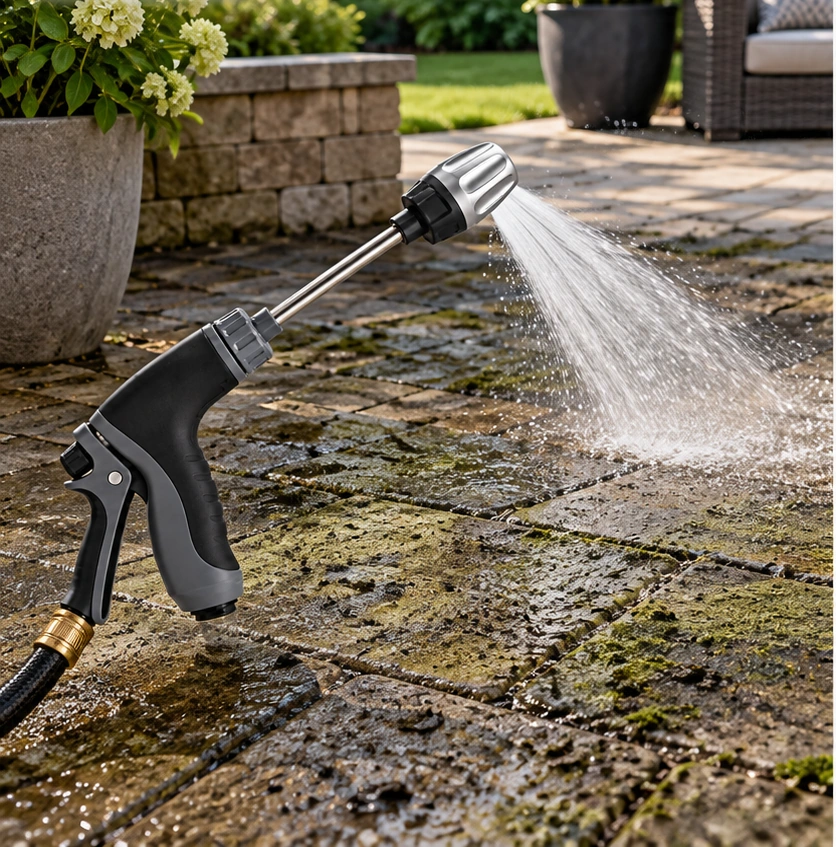
Use a broad spray rather than a narrow jet when the surface or joints are delicate. A nozzle can make rinsing faster, but it still works with the water pressure supplied by your home. It does not turn a garden hose into a powered pressure washer.
Choose the Mildest Cleaner That Fits the Job
For ordinary dirt, warm water with a small amount of mild dish soap is the safest starting point. This is a sensible starting point for routine cleaning. Apply it to a manageable section, let it wet the grime, then scrub with a stiff outdoor brush.
Organic growth such as algae, moss, or mildew may need a purpose-made patio cleaner. Follow the product label exactly, especially around plants, pets, painted surfaces, and natural stone. You may also see vinegar, bleach, soda crystals, or sodium hypochlorite suggested for outdoor cleaning. These can work on certain materials, but they are not universal solutions. Acids can damage some stone and cement-based joints, while chlorine-based cleaners can harm vegetation and discolor some surfaces. If the material is uncertain, use a cleaner specifically labeled for that surface.
Scrub in Small Sections
A long-handled stiff-bristle brush is useful for concrete and many pavers. Work back and forth across the surface, then change direction so the bristles reach texture and shallow grooves. Give extra attention to joints, shaded areas, and places under furniture where algae can build up.
Do not assume harder scrubbing is always better. If the patio is soft stone, coated, painted, or already worn, use a less aggressive brush. The goal is to loosen the grime after the cleaner has softened it, not grind the surface.
Rinse Before the Dirty Water Dries
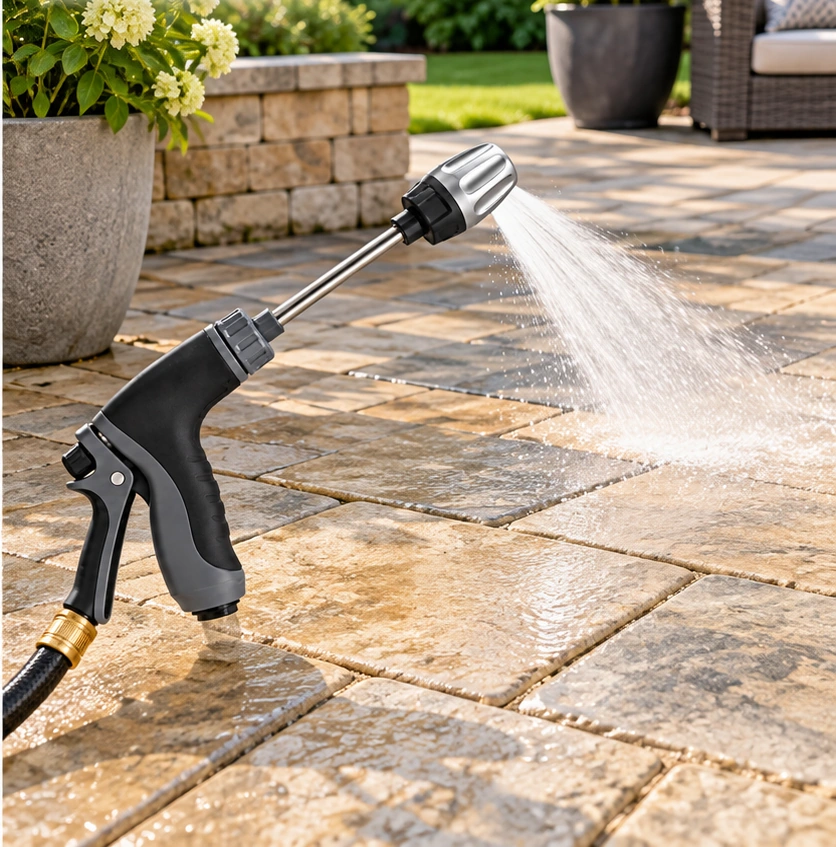
Rinse each cleaned section with fresh water. This is one of the most repeated points across the ranking articles. If soap and loosened dirt are allowed to dry, they can leave streaks or a dull film. Start at the higher side of the patio and push dirty water toward the normal drainage direction.
A focused hose nozzle can help move loosened soil from joints and textured pavers, but stay realistic about what it can do. Deep oil stains, heavy black spot, deeply rooted growth, and years of neglected buildup may need a specialist cleaner, repeated treatment, or professional cleaning.
Handle Stains Separately
After the patio dries, inspect it again. A general wash may remove the overall gray film but leave individual marks behind. Treat those spots based on the stain rather than repeating the strongest cleaner across the full area.
- Food and light grime: mild detergent and brushing are usually enough.
- Algae or moss: use a surface-safe outdoor cleaner and give it the label-specified dwell time.
- Rust: use a cleaner specifically made for rust and compatible with the paving material.
- Oil: absorb fresh oil first, then use a suitable degreaser if the surface allows it.
Never mix cleaning chemicals. In particular, do not combine chlorine bleach with acids, vinegar, ammonia, or other household cleaners.
Let the Patio Dry Before Judging the Result
Wet paving often looks cleaner and darker than it will when dry. Give the surface time to dry, then check for missed areas, streaks, or joints that need repair. If you plan to reseal the patio, follow the sealer manufacturer’s drying-time requirements. Allow the surface to dry fully before applying any sealer or protective finish.
Where a Garden Hose Nozzle Helps
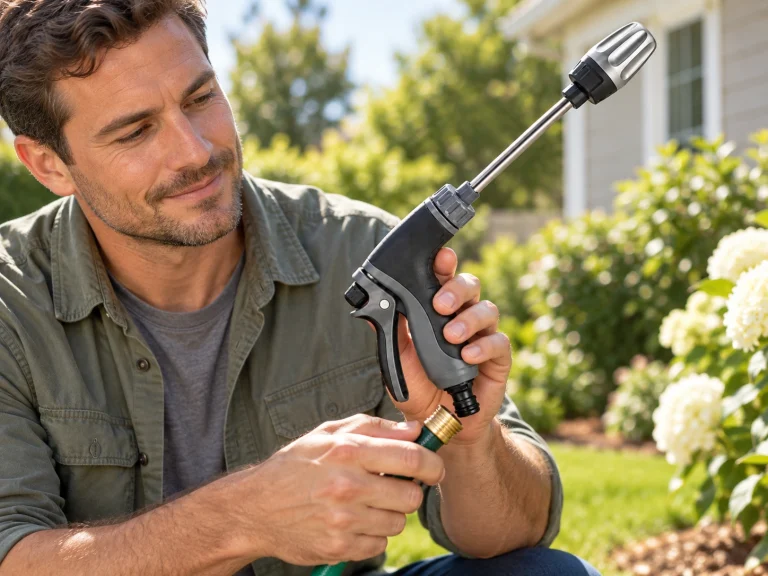
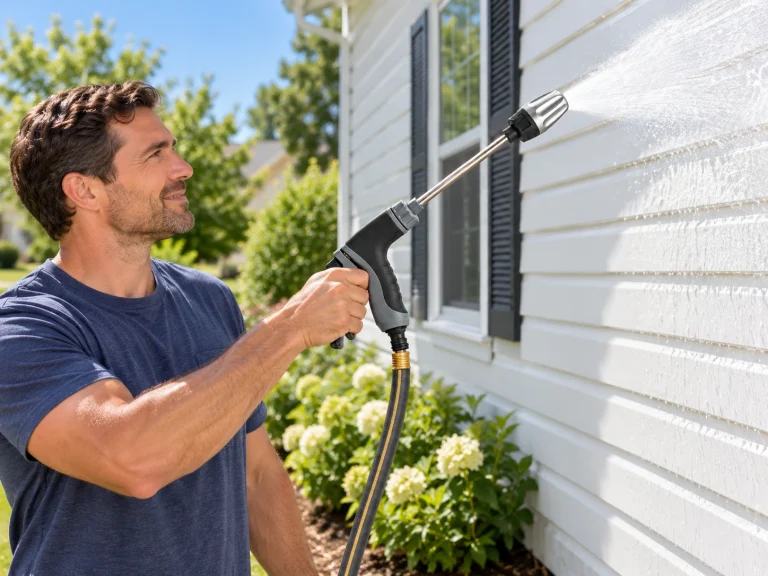
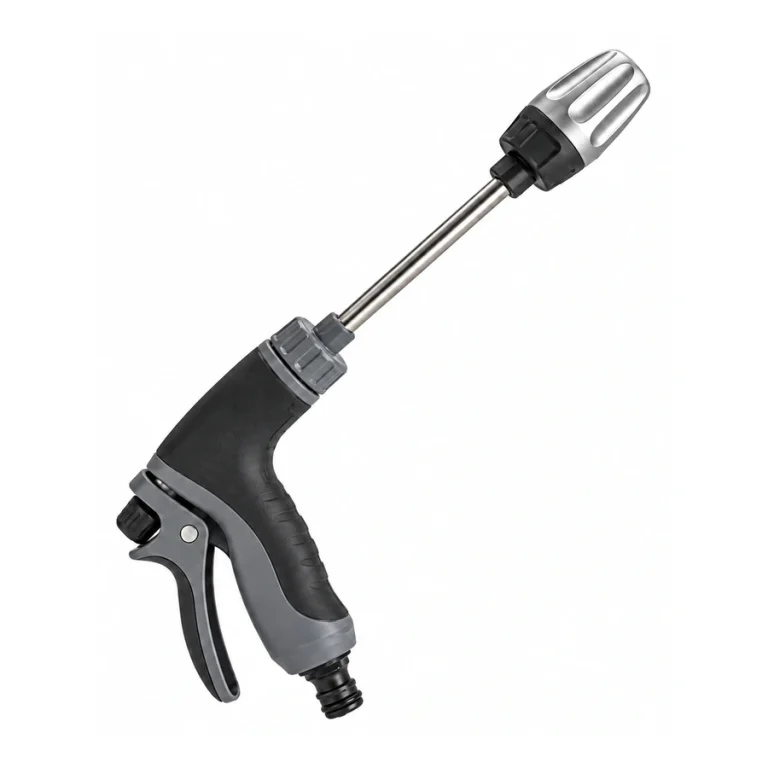
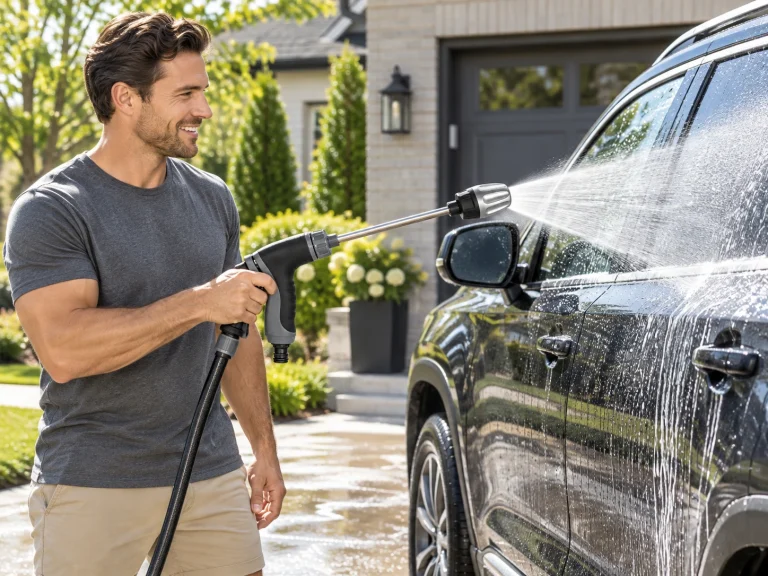
A good hose nozzle is useful in the rinse stages because it gives you control over spray width and water flow. A wider setting works well for general rinsing, while a more focused stream can help move loose dirt from suitable hard surfaces. The useful part is convenience and control, not creating pressure that is not present at the spigot.
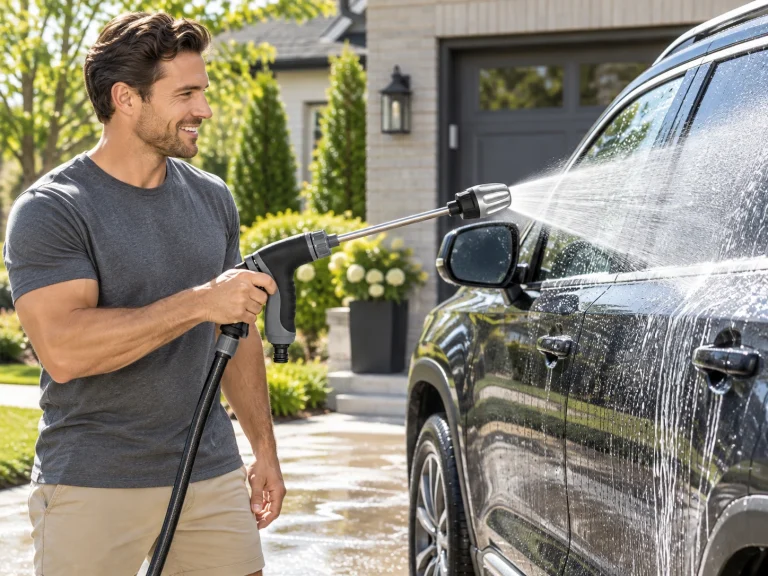
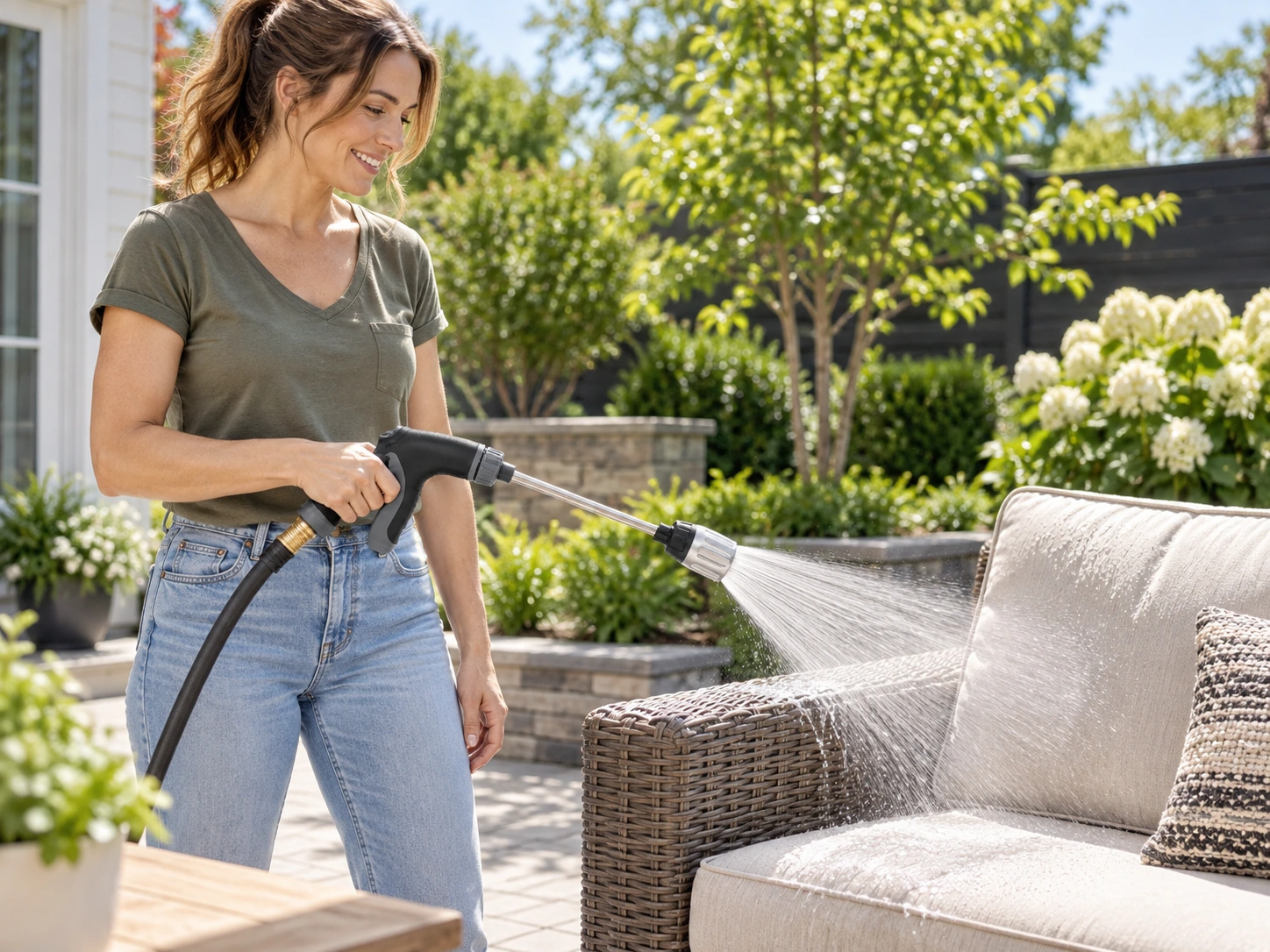
If most of your outdoor work is routine rinsing, car washing, patio maintenance, furniture cleaning, and similar jobs, a hose-based setup is quick to grab and easy to store. For deeply embedded stains or large neglected surfaces, a true pressure washer may still be the correct tool.
Final Patio-Cleaning Checklist
Clear the area, sweep it dry, test the surface, pre-wet, apply a compatible cleaner, scrub in sections, and rinse before residue dries. This slower method is simple, but it gives you more control around joints, soft surfaces, plants, and outdoor furniture. For a compact hose-based cleaning setup, you can also see HoseHawk Pro and compare it with the type of cleaning you normally do around your home.
Related reading: garden hose nozzle spray patterns, pressure washer vs garden hose nozzle.