Garden Hose Nozzle Leaking? Common Causes and Simple Fixes
A leaking garden hose nozzle does not always need to be replaced. The location of the leak is the best clue. Common causes include a worn or missing rubber washer, loose or crossed threads, a damaged coupling, mineral buildup, a failing internal seal, or a crack in the nozzle body.
Start with the water off. Dry the connection, then turn the water on slowly and watch exactly where the first drops appear. Repairing the right part is easier than tightening everything harder and hoping the leak stops.
Leak Between the Hose and Nozzle
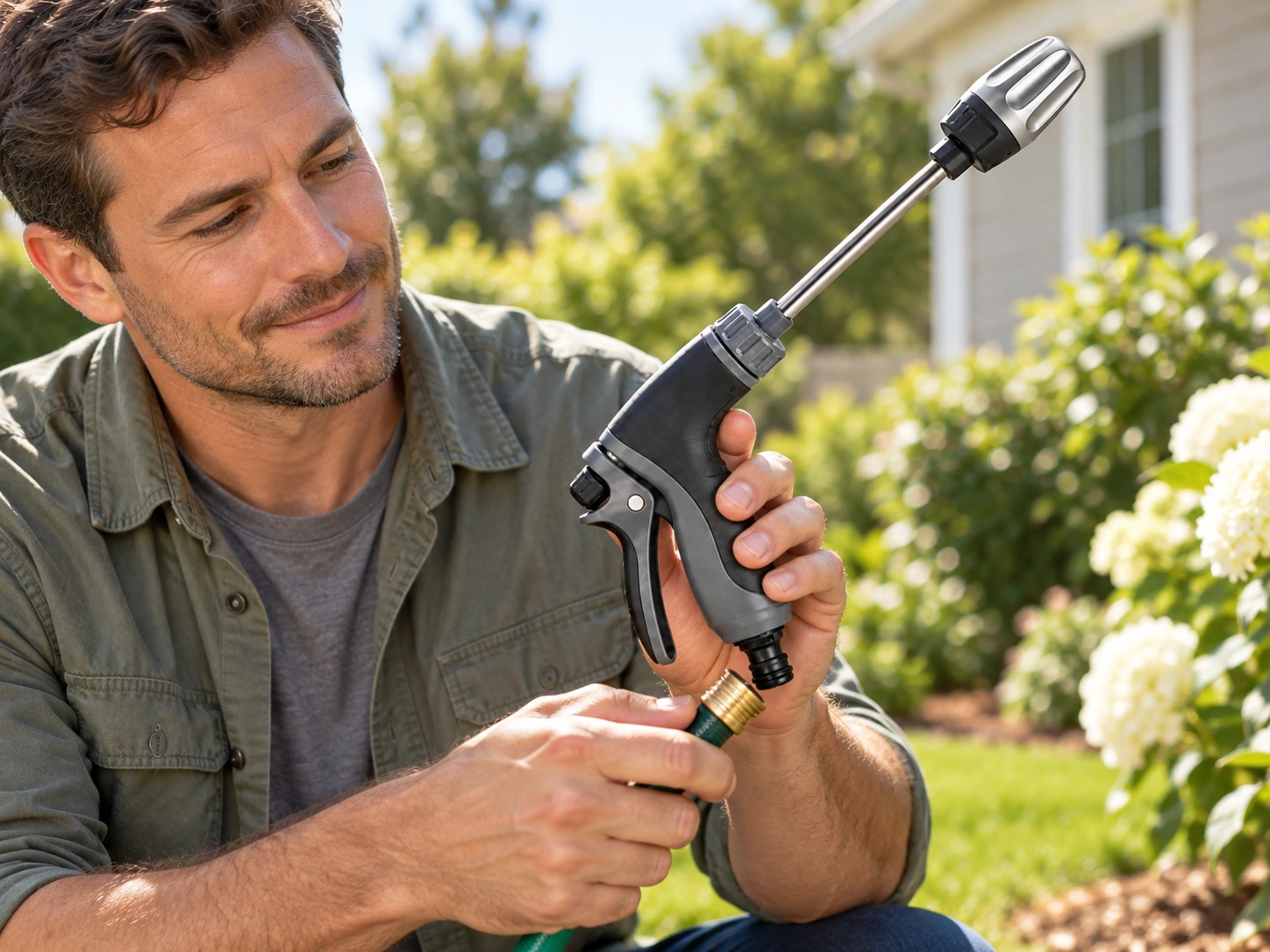
This is the most common and usually the easiest repair. Unscrew the nozzle and look inside the female connection. There should normally be a rubber hose washer seated flat inside. If it is missing, cracked, hard, distorted, or flattened, replace it with the correct garden-hose washer.
UC Master Gardener guidance specifically identifies worn washers as a common cause of leaks at the hose-to-nozzle connection. A new washer is inexpensive and takes only a few minutes to install.
Make Sure the Threads Are Straight
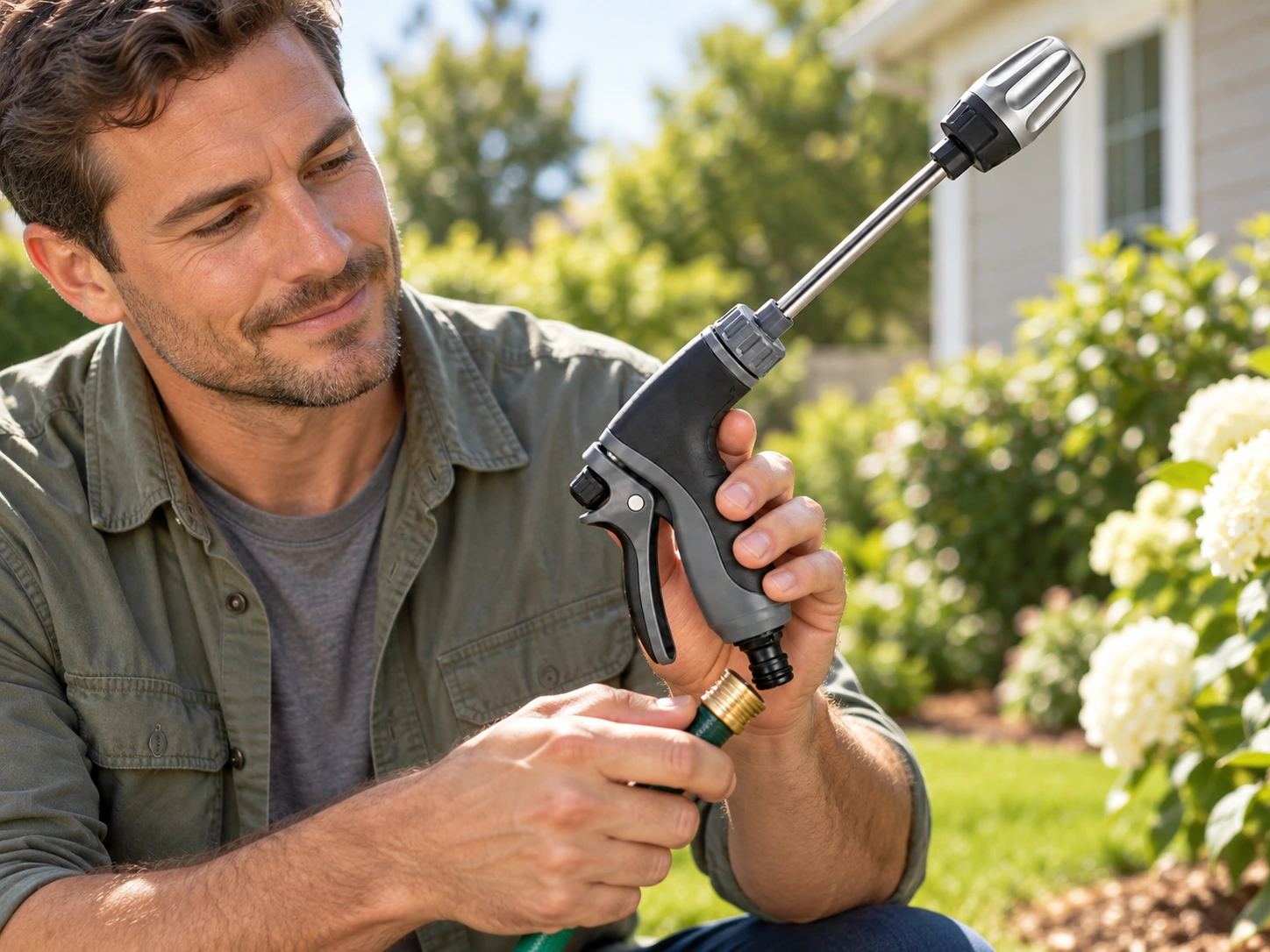
If the washer looks good, reconnect the nozzle carefully. Start the threads by hand and make sure they turn smoothly. Cross-threading can prevent the washer from seating evenly and can damage the fitting.
Garden hose connections generally seal at the washer, not by extreme thread tightness. Hand-tight plus only the amount recommended by the manufacturer is usually enough. Over-tightening can crush the washer or damage plastic fittings.
Inspect the Hose Coupling
If water appears behind the threaded fitting rather than between the two faces, the hose coupling itself may be loose or damaged. Look for a bent collar, split metal, pulled-out hose material, or movement between the hose and fitting.
A damaged coupling can often be replaced with a hose-repair fitting if the hose body is still in good condition. Follow the repair fitting instructions and choose the correct hose diameter.
Leak From the Trigger or Handle
Water coming from the trigger pivot, valve stem, or handle usually points to an internal seal or valve problem. Some nozzles are serviceable and others are not. Check the manufacturer’s instructions before opening the body because springs and small seals may be under tension.
If the nozzle is inexpensive, molded closed, badly corroded, or leaking from several internal points, replacement can be more practical than repair.
Leak From the Nozzle Head
A small amount of water left in the head after shutoff can be normal drainage. Continuous leaking while the trigger is released suggests the internal shutoff is not sealing fully.
Dirt, grit, mineral scale, a damaged valve seat, or worn seal can prevent complete closure. Flush the nozzle and clean removable parts according to its instructions. If the valve still does not close, the internal components may need replacement.
Cracks in the Body
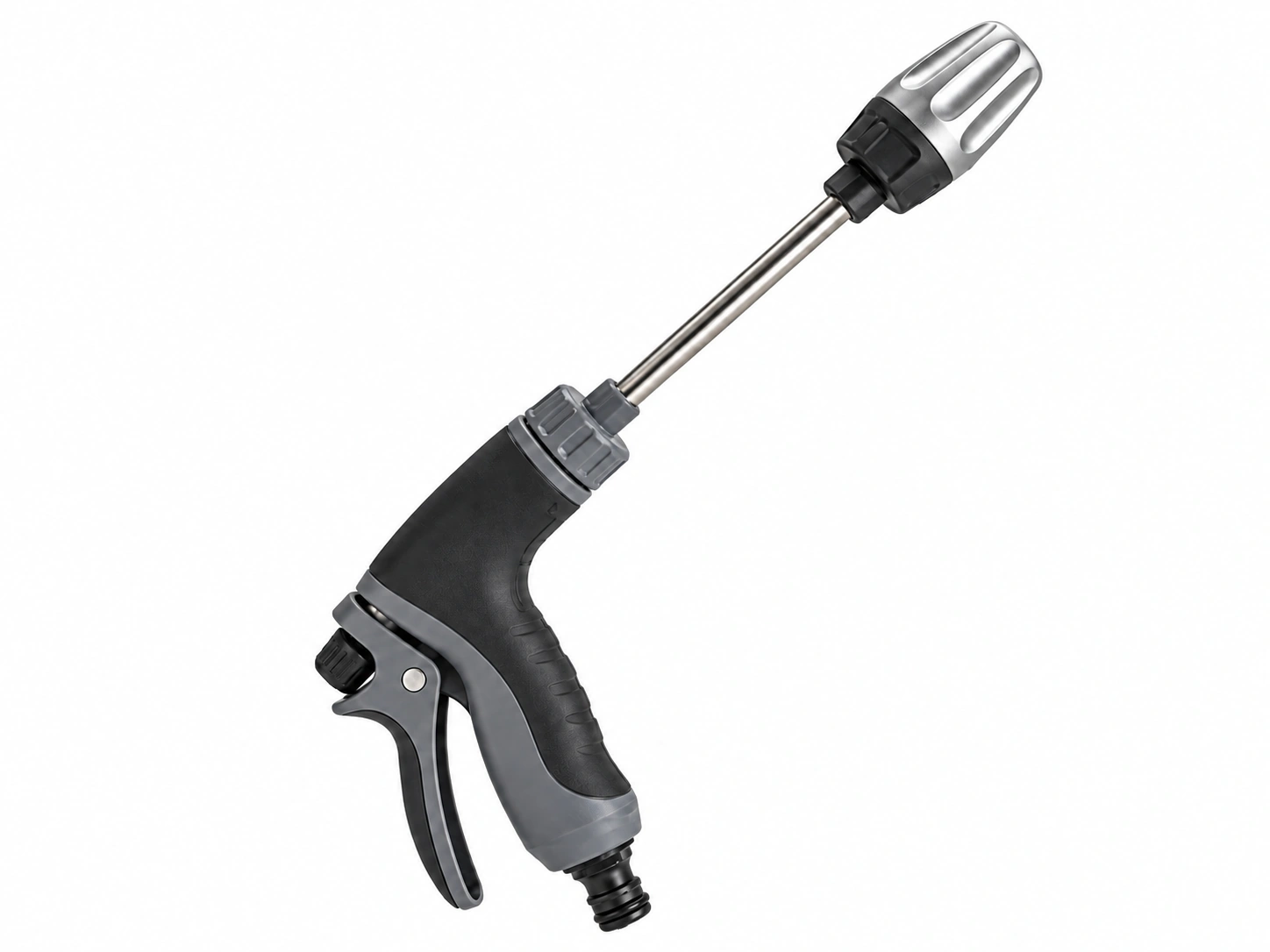
Inspect metal and plastic bodies under good light. Freeze damage, drops, corrosion, and age can create small cracks that open only under water pressure. A cracked structural body is usually a replacement issue rather than a reliable glue repair.
If a nozzle or hose was left full of water through freezing weather, inspect fittings carefully before the next season.
Mineral Buildup Can Cause Leaks and Weak Spray
Hard-water minerals can collect around small openings and moving parts. This can distort the spray, reduce flow, and stop a valve from seating correctly. If the manufacturer permits descaling, remove the nozzle and soak only the appropriate parts in the recommended solution.
Do not scrape precision openings aggressively with metal objects. Enlarging or damaging an outlet can permanently change the spray pattern.
Do You Need Plumber’s Tape?
For a standard garden hose connection with a flat washer, the washer is normally the primary seal. Adding thread tape to every garden-hose joint is not a substitute for a missing or damaged washer.
Some adapters use tapered pipe threads where thread sealant is appropriate, but that is a different connection type. Use tape or sealant only where the fitting manufacturer specifies it.
Check the Faucet Too
A leak can look like a nozzle problem when water is actually escaping at the outdoor faucet, vacuum breaker, splitter, reel, or upstream quick connector. Dry each joint and test from the source outward.
If the faucet leaks around its stem when open, that repair is separate from the nozzle and may require plumbing service.
Five-Minute Nozzle Leak Checklist
- Turn off the water and remove the nozzle.
- Check the rubber washer.
- Inspect and clean the threads.
- Reconnect by hand without cross-threading.
- Turn water on slowly and locate the first leak.
- Inspect the coupling if water comes from behind the fitting.
- Check the trigger, head, and body for internal leaks or cracks.
How to Prevent Repeat Leaks
Do not drag the nozzle by the hose, leave it where vehicles can run over it, or store it full of water through freezing conditions. Relieve water pressure after use when appropriate, keep spare washers with your hose supplies, and rinse dirt from the connection before attaching it.
A small amount of maintenance is easier than living with a spray of water at your wrist every time the hose is turned on.
Replace the Washer Before Adding More Tightness
If a connection needs extreme force to stop dripping, something is probably wrong with the sealing surface, washer, or threads. Repeated over-tightening can deform a soft washer and make future leaks worse. A clean fitting and a fresh correctly sized washer are a better first repair.
Watch for Freeze Damage
Water expands when it freezes. Nozzles left outside with trapped water can crack internally or around threaded areas even when the damage is hard to see. Before spring use, connect the nozzle slowly and inspect it under low flow before opening the faucet fully.
Repair the Seal Before Replacing the Tool
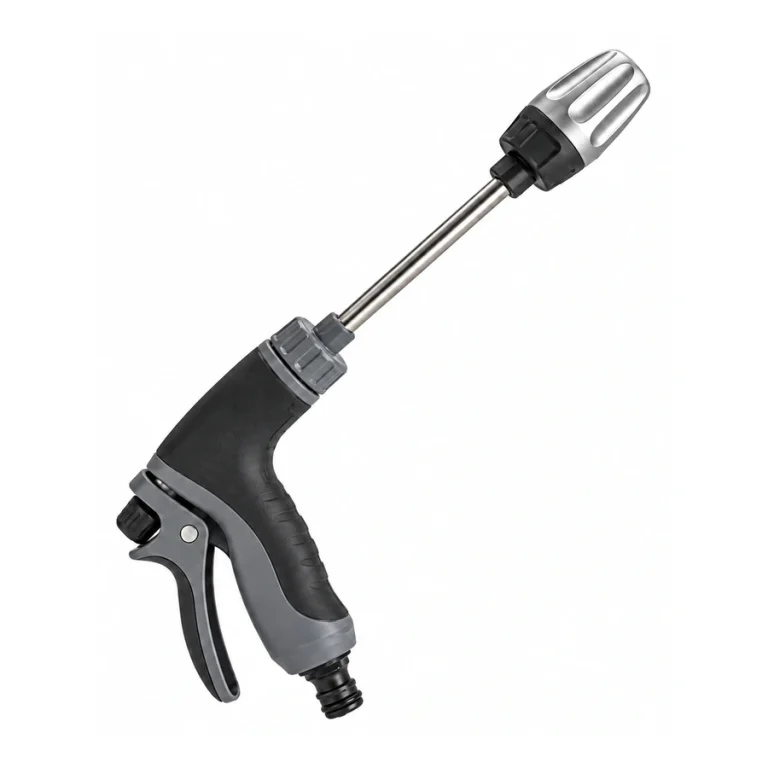
If a leak is at the hose connection, start with the washer and threading. If the body is cracked or an internal valve cannot be serviced, replacement makes more sense. For a compact adjustable attachment designed for routine outdoor use, you can compare HoseHawk Pro after confirming that the hose and faucet themselves are in good condition.
Related reading: garden hose nozzle spray patterns, pressure washer vs garden hose nozzle.