Pressure Washer vs Garden Hose Nozzle: Which Do You Actually Need?
A pressure washer and a garden hose nozzle are different tools. A pressure washer uses a pump to raise water pressure dramatically, while a hose nozzle works with the pressure already available from the outdoor faucet and changes how that water is delivered. The right choice depends on the surface, the amount of buildup, storage space, setup time, and how often you need heavy cleaning power.
That means the right choice is not simply “which is stronger?” A pressure washer is stronger. The useful question is whether your cleaning job actually needs that force, plus the extra setup, storage, power source, and surface precautions that come with it.
The Biggest Difference Is Pressure
Normal residential water supply is commonly measured in tens of PSI, while consumer pressure washers operate in the thousands of PSI. Exact numbers vary by house and machine, but the gap is large. A garden hose nozzle can narrow and concentrate a stream, making it feel stronger at the target, but it does not multiply source pressure like a pump.
This is important for honest product comparison. If you need to strip deeply embedded grime from durable concrete or handle a large restoration job, a hose nozzle should not be presented as a direct pressure-washer substitute.
Where a Garden Hose Nozzle Makes More Sense
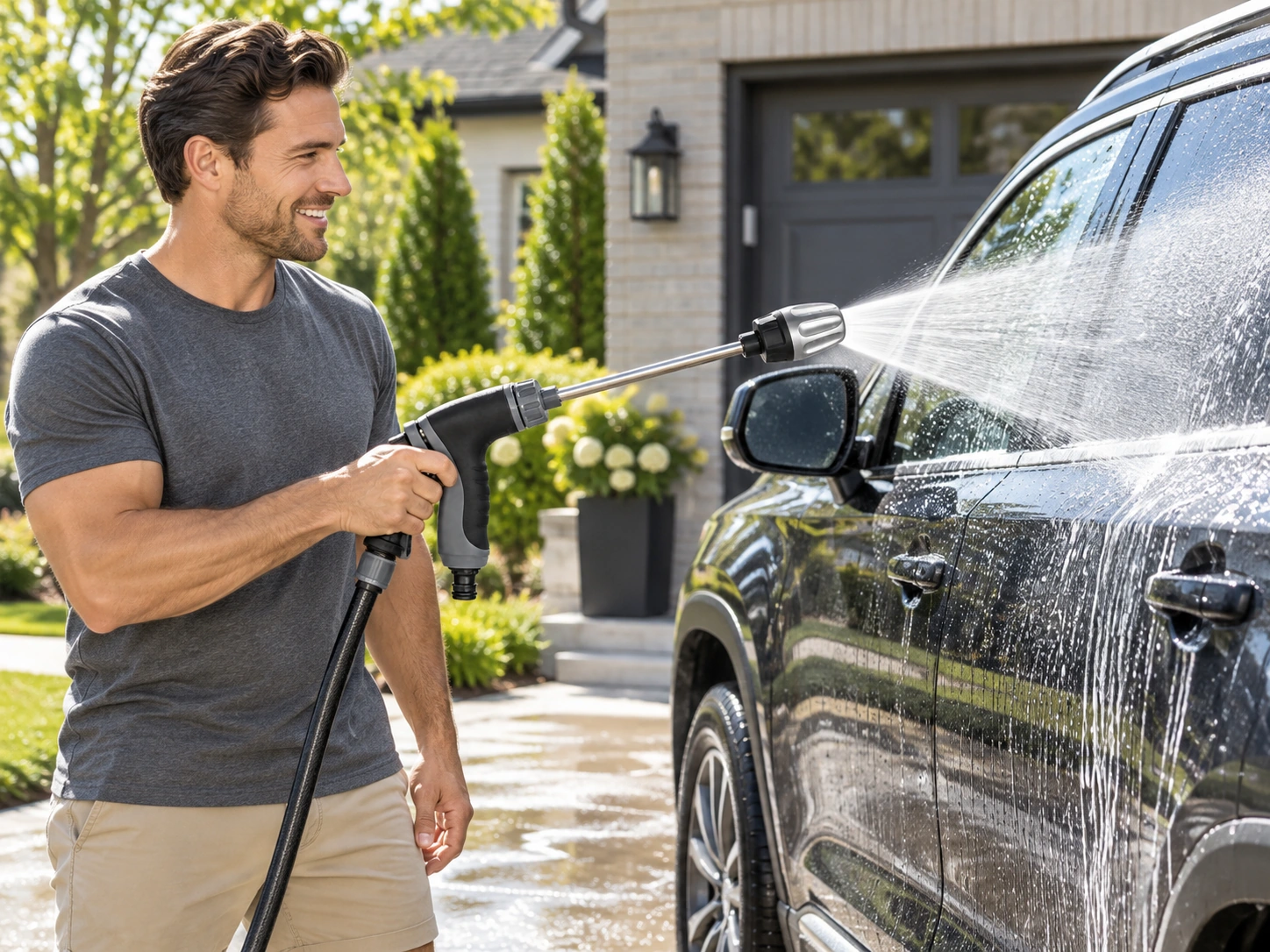
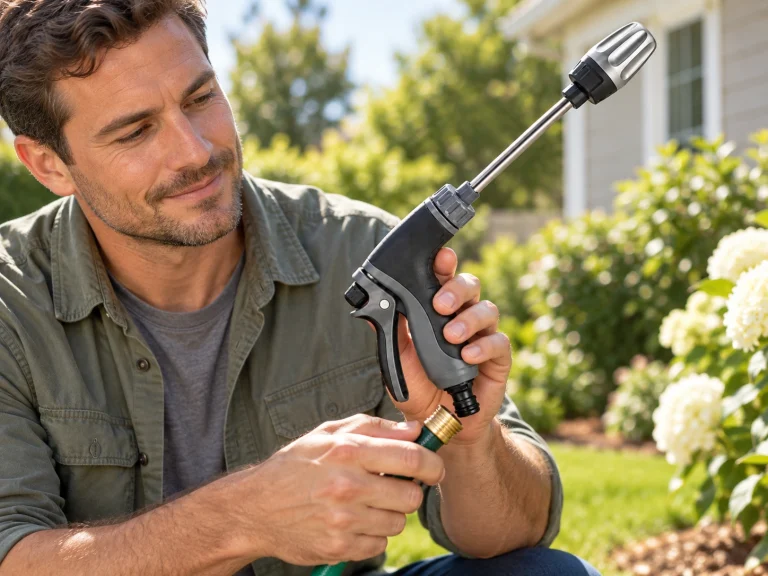
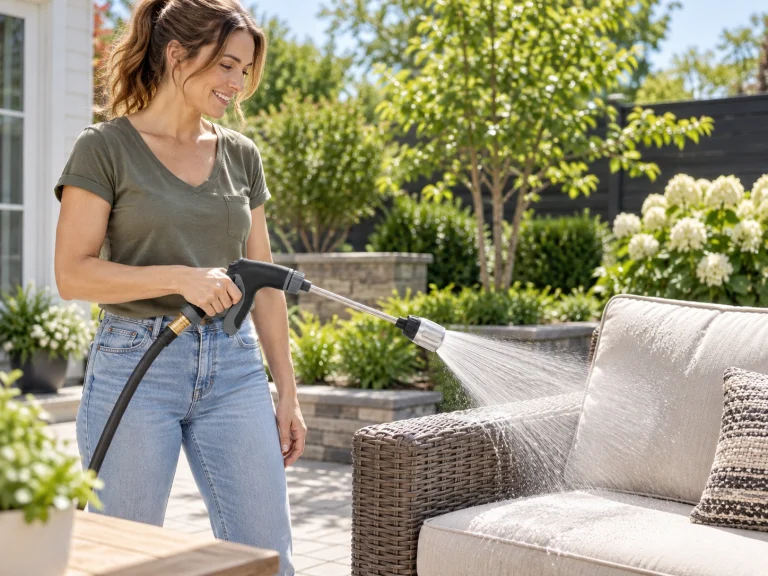
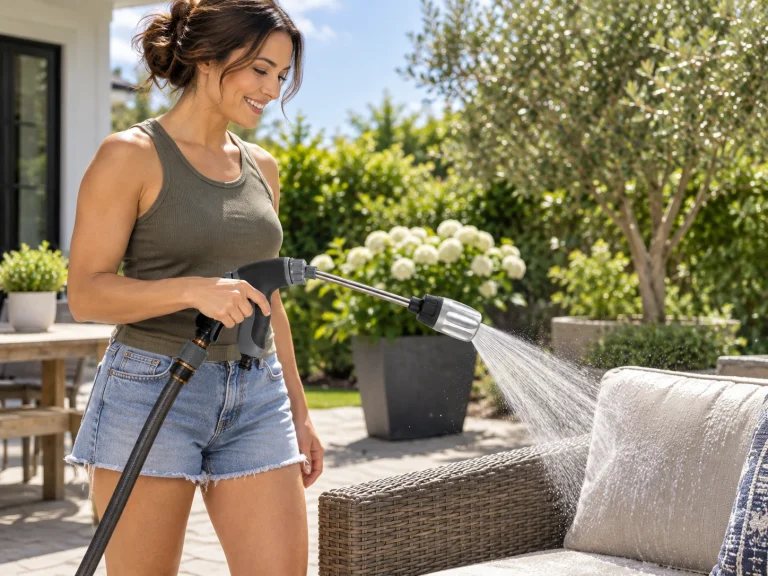
A hose nozzle is often enough for routine washing and rinsing: cars, outdoor furniture, garden tools, loose dirt on patios, light siding maintenance, muddy boots, bins, and general yard cleanup. Setup is quick because you already have the water source and hose.
There is no motor to plug in, fuel to store, pump to winterize, or large machine to move. For a homeowner doing short jobs regularly, that simplicity can matter more than maximum pressure.
Where a Pressure Washer Has the Advantage
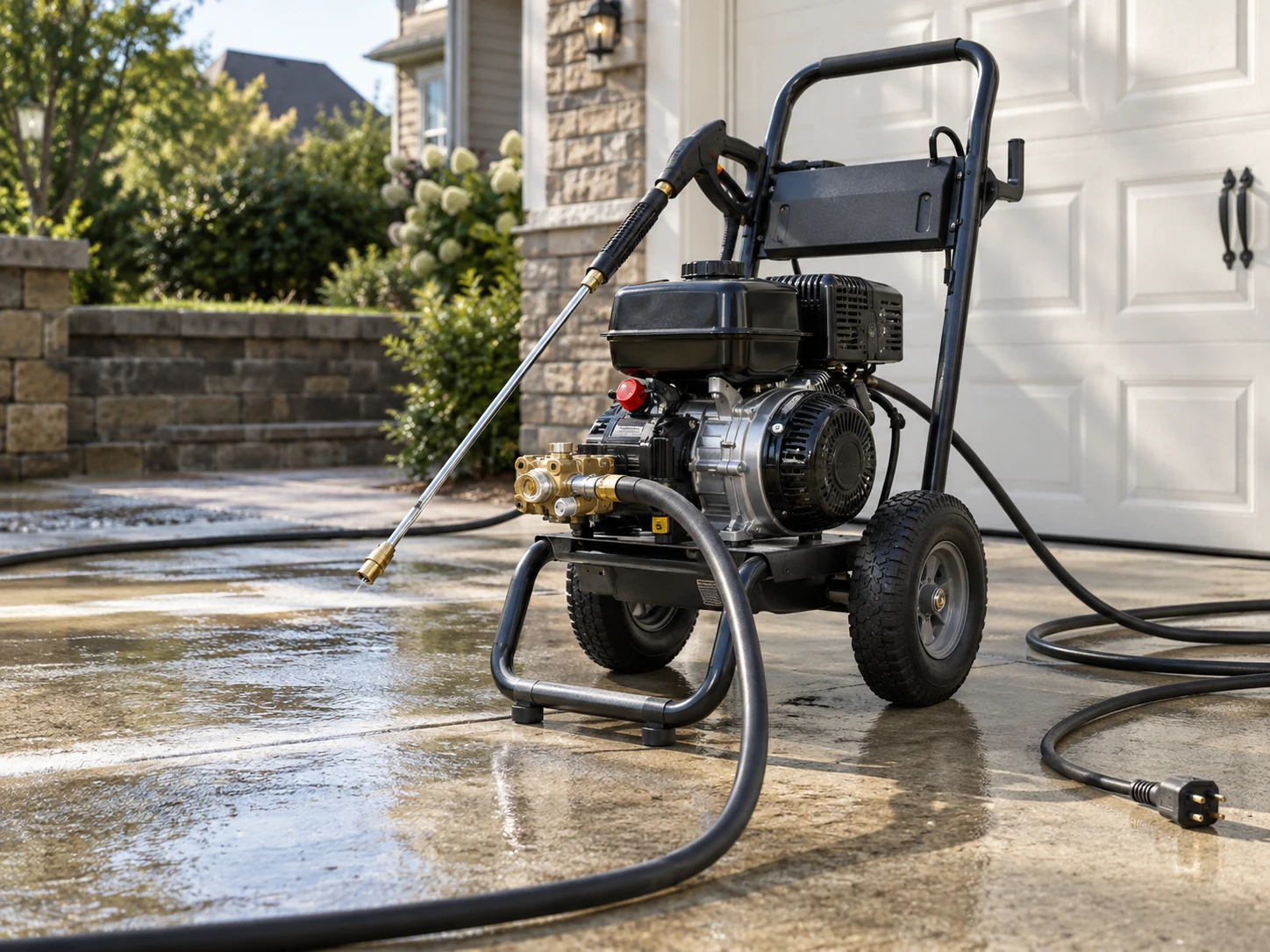
Pressure washers are designed for jobs where force and cleaning speed matter. Large concrete driveways, heavily soiled masonry, stubborn buildup on compatible hard surfaces, and some preparation work can benefit from the extra power.
Machine size and type also matter. Electric units are typically easier to manage for residential work, while gas machines can provide higher cleaning output for larger or tougher jobs. Always match the machine and nozzle tip to the surface.
Setup and Storage
A garden hose nozzle normally needs only a compatible hose connection. A pressure washer needs a water inlet, high-pressure hose, wand, correct nozzle tip, and either electricity, a battery, or fuel depending on the model. Some units also need detergent setup.
After the job, a nozzle can go in a small drawer or hose-reel area. A pressure washer takes more storage space and may need seasonal maintenance. If you clean often but only for ten or fifteen minutes at a time, setup time becomes part of the decision.
Surface Safety Is Different
More pressure creates more cleaning capability and more potential to cause damage. Strong pressure can etch soft material, raise wood grain, remove loose paint, disturb paver joints, damage screens, and force water into siding or seals. Very concentrated pressure-washer tips can damage the wrong surface.
A garden hose nozzle generally gives a larger margin for routine rinsing, but it is not risk-free. A tight stream held close can still damage delicate plants, old finishes, loose joints, or vulnerable seals. Start broad and farther away.
Car Washing
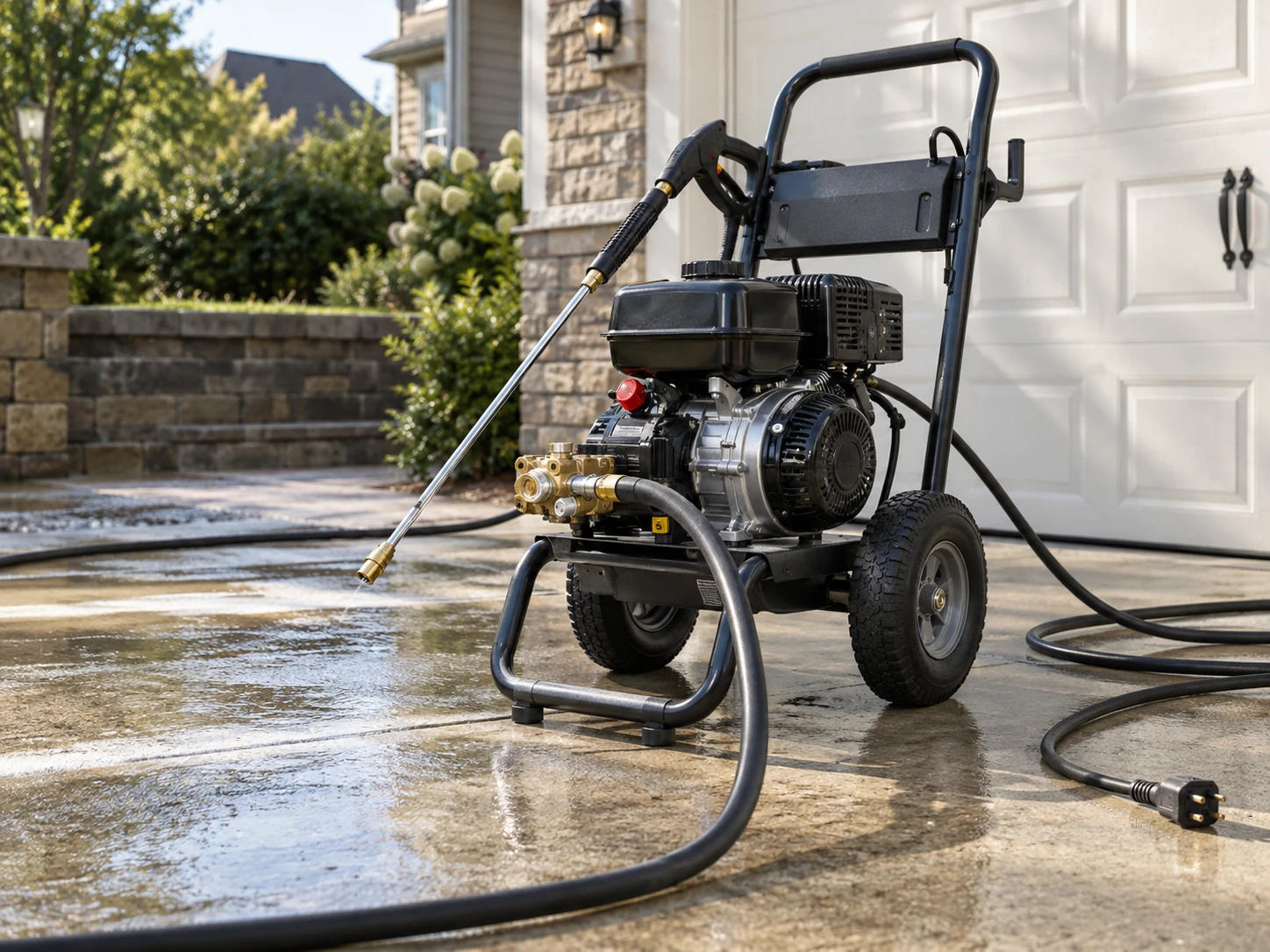
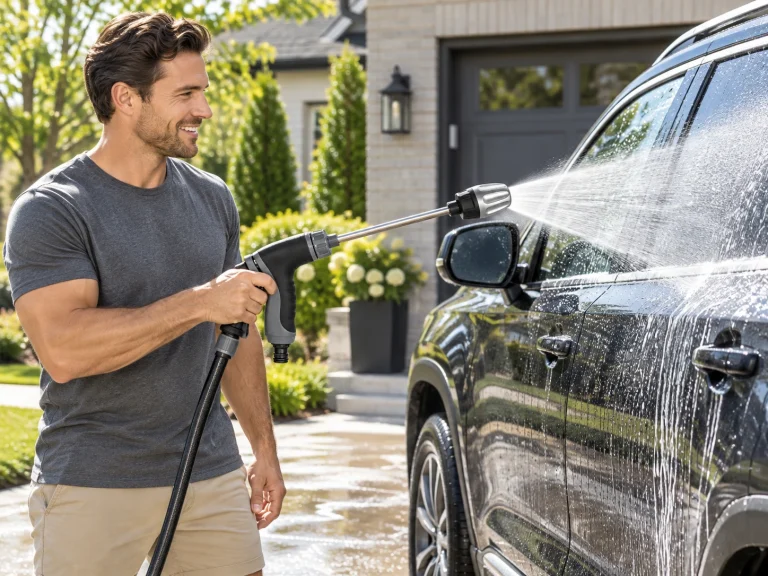
For normal home car washing, a garden hose with a broad spray is enough for pre-rinsing and rinsing soap. Paint safety depends more on removing grit before contact, using clean wash media, and drying correctly than on trying to blast dirt away.
A pressure washer can be useful for wheel arches, foam-cannon setups, and faster rinsing, but it must be used with an appropriate tip and distance around paint, trim, sensors, seals, and damaged areas.
Patios, Decks, and Siding
On a lightly dirty patio, cleaner, brushing, and a garden-hose rinse can be sufficient. On a heavily stained concrete slab, a pressure washer can save significant time. Decks and siding require more caution because too much pressure can damage wood fibers or drive water behind cladding.
The surface condition should decide the tool. Older joints, soft materials, weathered finishes, and unknown surfaces favor a gentler test-first approach.
Water Use Is Not Just About PSI
Pressure and flow are different measurements. A pressure washer uses a pump to create high pressure and often delivers a controlled gallons-per-minute rate. A garden hose can move substantial water at much lower pressure. Actual water use depends on the machine, nozzle, source, and how long you run it.
Do not assume the lower-pressure option always uses less water. Finishing a job quickly with the right tool can matter as much as the rated flow.
Cost and Maintenance
A quality hose nozzle is a much smaller purchase and has few maintenance needs beyond washers, seals, rinsing, and dry storage. Pressure washers cost more and contain pumps, hoses, fittings, and power components that can wear or require care.
If you only have occasional heavy cleaning, renting a pressure washer can sometimes make more sense than owning one. If most jobs are routine rinsing, a hose attachment may be the tool you reach for more often.
A Simple Decision Guide
- Choose a garden hose nozzle for frequent light cleaning, rinsing, watering, cars, furniture, and quick jobs.
- Choose a pressure washer for large durable surfaces with stubborn buildup where high pressure is appropriate.
- Use both if your home has a mix of routine maintenance and occasional deep-cleaning projects.
Noise and Neighbors
A hose nozzle is nearly silent apart from the water itself. Pressure washers add motor or engine noise, which can matter in small yards, early-morning work, apartments, and closely spaced neighborhoods. This is not the main buying factor, but it is part of everyday convenience.
Buy for the Jobs You Actually Do
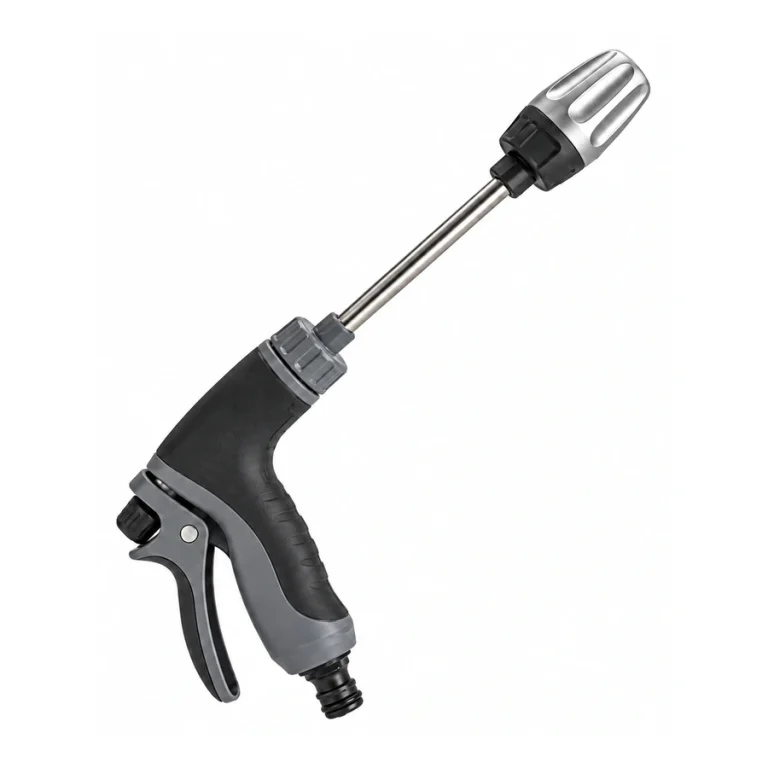
A garden hose nozzle wins on simplicity, portability, and everyday convenience. A pressure washer wins on raw cleaning force. Neither is universally better. If your priority is a compact attachment for routine outdoor cleaning with your existing hose, see HoseHawk Pro. If a job genuinely requires pump-driven pressure, use a pressure washer designed for that surface.
Related reading: garden hose nozzle spray patterns, garden hose nozzle buying guide.