How to Clean a Deck Without a Pressure Washer
A deck can be cleaned without a pressure washer, and for older boards, softwood, or delicate finishes, the gentler method may be the safer choice. Too much pressure can raise wood fibers, create a fuzzy surface, cut grooves, or worsen weak areas. A suitable cleaner, a deck brush, and a controlled garden-hose rinse can remove everyday dirt while giving you better control.
The lower-pressure method relies on three things: a cleaner that loosens the soil, a brush that provides controlled agitation, and a garden hose that rinses the loosened material away. It takes more time than blasting the surface, but it gives you better control.
Inspect the Deck Before Getting It Wet
Check for loose fasteners, splintering boards, soft or rotten areas, cracked composite, and unstable railings. Cleaning is not a repair. If a board feels unsafe, fix it first.
Also identify the material. Pressure-treated pine, cedar, hardwood, composite, and painted decks can require different cleaners and brush stiffness. If you are not sure, use a mild cleaner and test a hidden section.
Clear the Surface and Clean the Gaps
Remove furniture, planters, grills, rugs, and storage boxes. Sweep leaves and loose dirt. Pay attention to the spaces between boards because packed organic debris holds moisture and can contribute to decay.
A narrow plastic tool or putty knife can help remove debris from board gaps, but work carefully so you do not damage the edges. Trim plants that rub against the deck so the surface can dry after cleaning.
Protect Nearby Plants
Before applying cleaner, wet nearby plants and soil. If the cleaning-product instructions recommend covering vegetation, do it. Runoff from a deck goes somewhere, so plan your working direction and avoid letting concentrated cleaner collect in a garden bed.
Choose a Cleaner for the Deck Material
Mild dish soap and water can handle normal surface dirt. For gray weathering, algae, mildew, or heavier organic buildup, a dedicated deck cleaner may be more effective. Oxygen-based products can be a gentler option than strong chlorine bleach for wood because harsh bleach can be hard on fibers, fasteners, and surrounding plants.
Follow the cleaner label. Do not invent a stronger dilution because the deck is dirty. More chemical is not automatically more cleaning power, and over-concentration can discolor the surface.
Let the Cleaner Work
Apply cleaner in manageable sections and give it the recommended dwell time. Keep it wet if the label says not to let it dry. On warm days, work in shade or smaller areas so the solution stays active long enough to loosen the grime.
This is one of the biggest differences between cleaning and simply spraying water. The cleaner breaks the bond between the dirt and the surface. The brush and rinse remove what has been loosened.
Scrub With the Grain
Use a long-handled brush that suits the material. Softer wood and composite often need a softer brush than rough concrete or pavers. Scrub in the direction of the grain on wood. Cross-grain scrubbing can make raised fibers and marks more noticeable.
Give stained areas another pass rather than grinding the whole deck with maximum force. If a spot still will not lift, identify the stain before choosing a stronger product.
Rinse With a Garden Hose
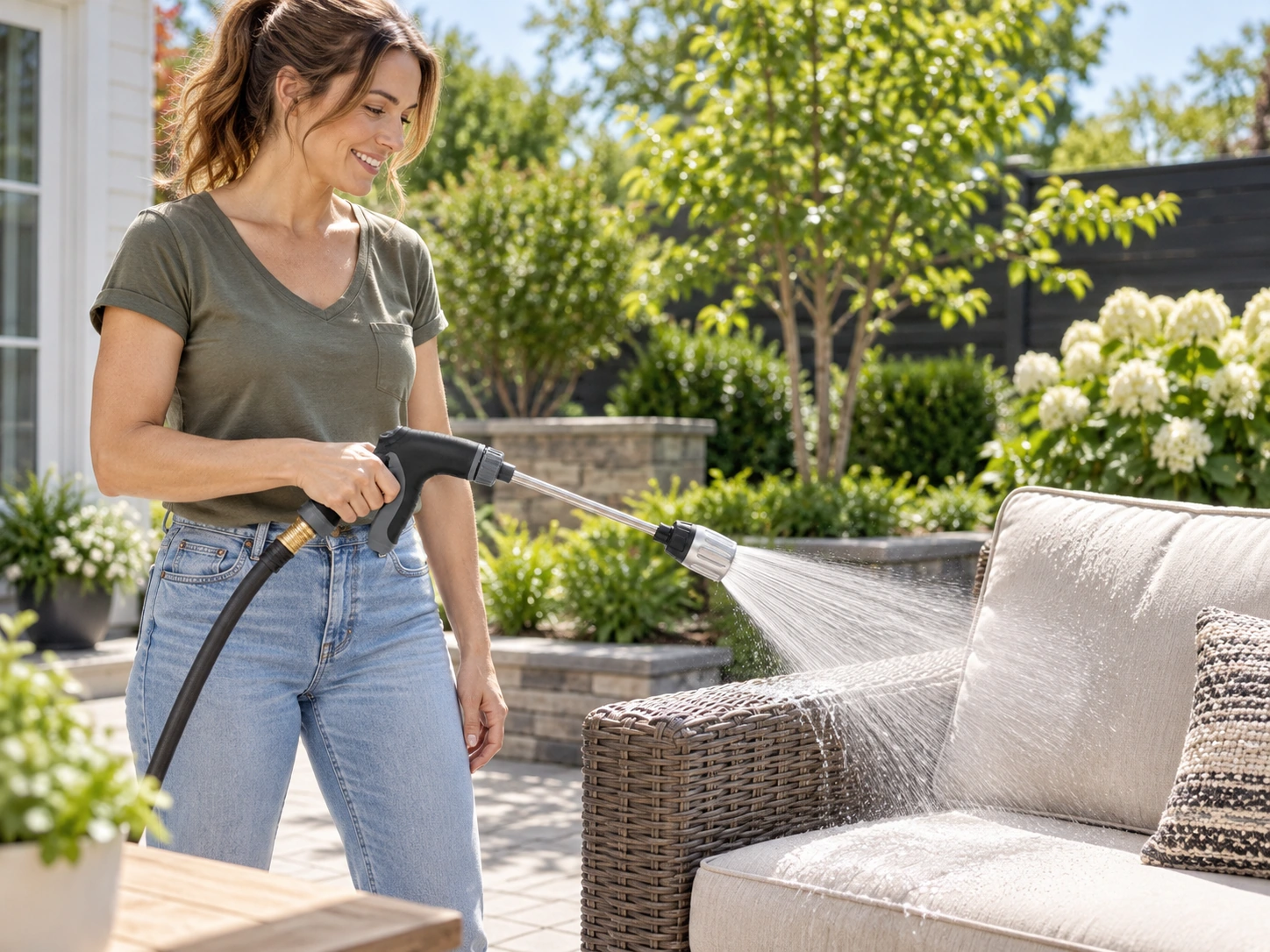
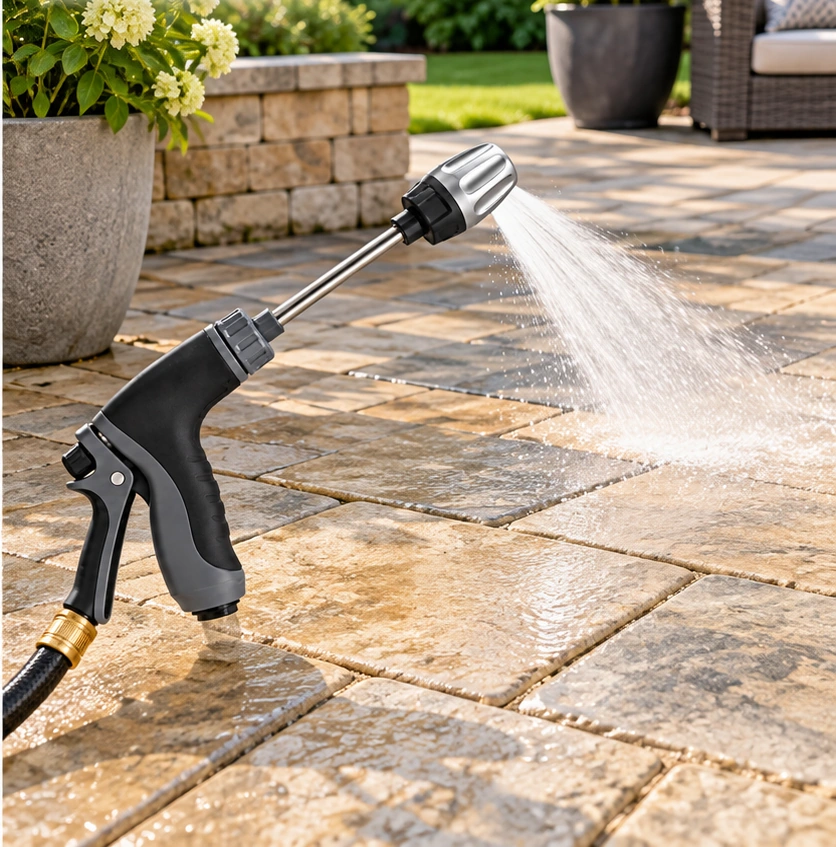
Use a broad spray to rinse cleaner and loosened dirt from the boards. Work with the board direction and natural drainage. A garden hose nozzle gives you useful control without the cutting force of a pressure washer.
Keep rinsing until suds are gone from the surface and gaps. If nearby plants were exposed to runoff, rinse them with clean water too.
Let the Deck Dry Fully
Do not rush into staining or sealing. A deck often needs at least about 48 hours of suitable dry weather before finishing, but actual drying time depends on wood type, shade, humidity, temperature, and how wet the deck became. Follow the coating manufacturer’s moisture and drying requirements.
If the wood feels rough after it dries, light sanding may be needed before a finish is applied. This is another reason to avoid excessively aggressive washing that raises the grain.
What About Composite Decking?
Composite boards are different from wood. Use products approved by the composite manufacturer and avoid harsh solvents or brushes that can scratch the cap layer. Mild soap, soft brushing, and a garden-hose rinse are common starting points, but brand-specific instructions should come first.
When a Pressure Washer Still Makes Sense
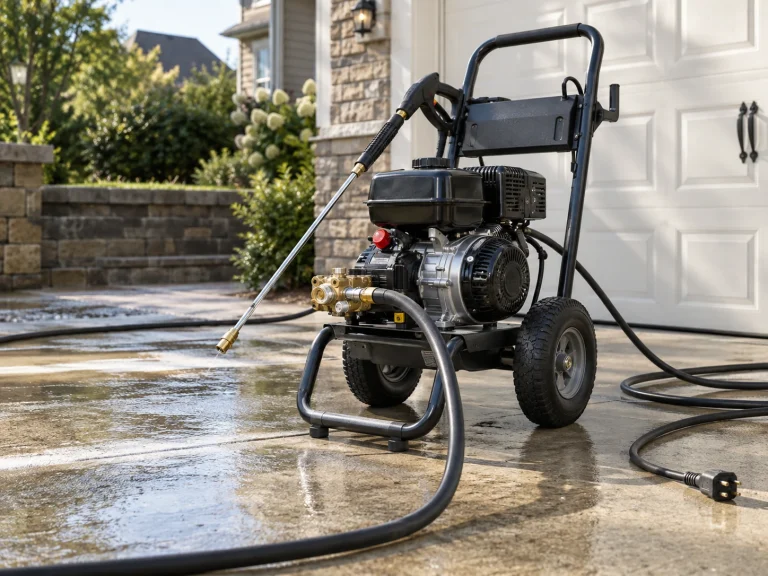
Large heavily stained decks may justify a pressure washer, especially in experienced hands. If you use one, follow the deck manufacturer’s limits, use a wide fan, keep the wand moving, and stay well away from zero-degree tips. A machine is not automatically wrong; the risk comes from using more force than the surface can handle.
Give the Deck Time to Dry Before Finishing
Do not judge the final color or apply stain while the boards are still wet. Wood darkens when saturated, and moisture trapped under a finish can create problems later. Let the deck dry fully according to the weather and the coating manufacturer’s instructions before staining or sealing.
After drying, walk the surface again. Check for raised fasteners, splinters, fuzzy grain, or areas that still feel slippery. Small trouble spots are easier to correct before furniture and rugs go back in place.
Rinse the Gaps and Edges Carefully
Cleaner and loosened debris can collect where boards meet walls, rail posts, and stairs. Finish with a controlled rinse through these edges instead of leaving dirty water to dry in the gaps. Keep the water moving away from doors and siding, and check that drainage paths remain open.
A Safer Deck Routine
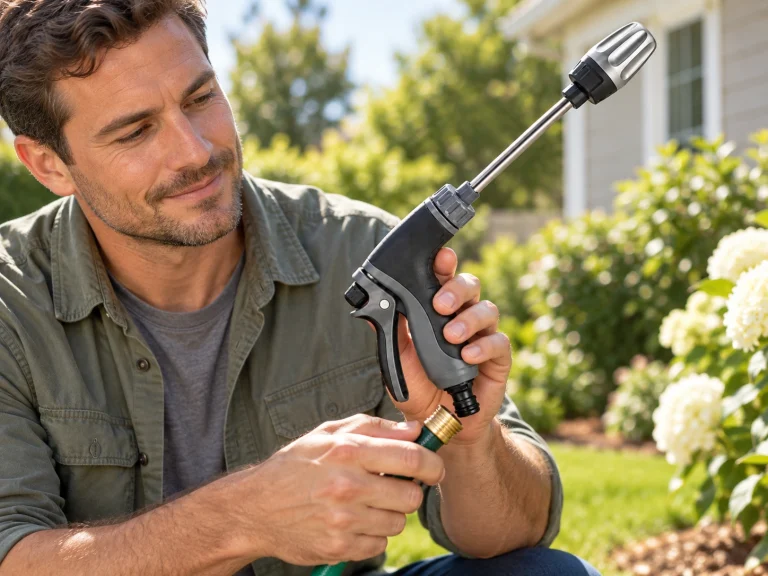
Clear the deck, inspect the boards, protect plants, apply the right cleaner, scrub with the grain, rinse gently, and give the surface time to dry. For regular maintenance, a garden hose and adjustable nozzle are often enough to complete the rinse stage without adding unnecessary force. You can see HoseHawk Pro if a compact hose-based cleaning tool fits the way you maintain your outdoor areas.
Related reading: garden hose nozzle spray patterns, pressure washer vs garden hose nozzle.